
Northstar Traffic Technologies Arrow Board PCB Repair (IDERs 11027)
Project Overview: Arrow Board PCB Repair
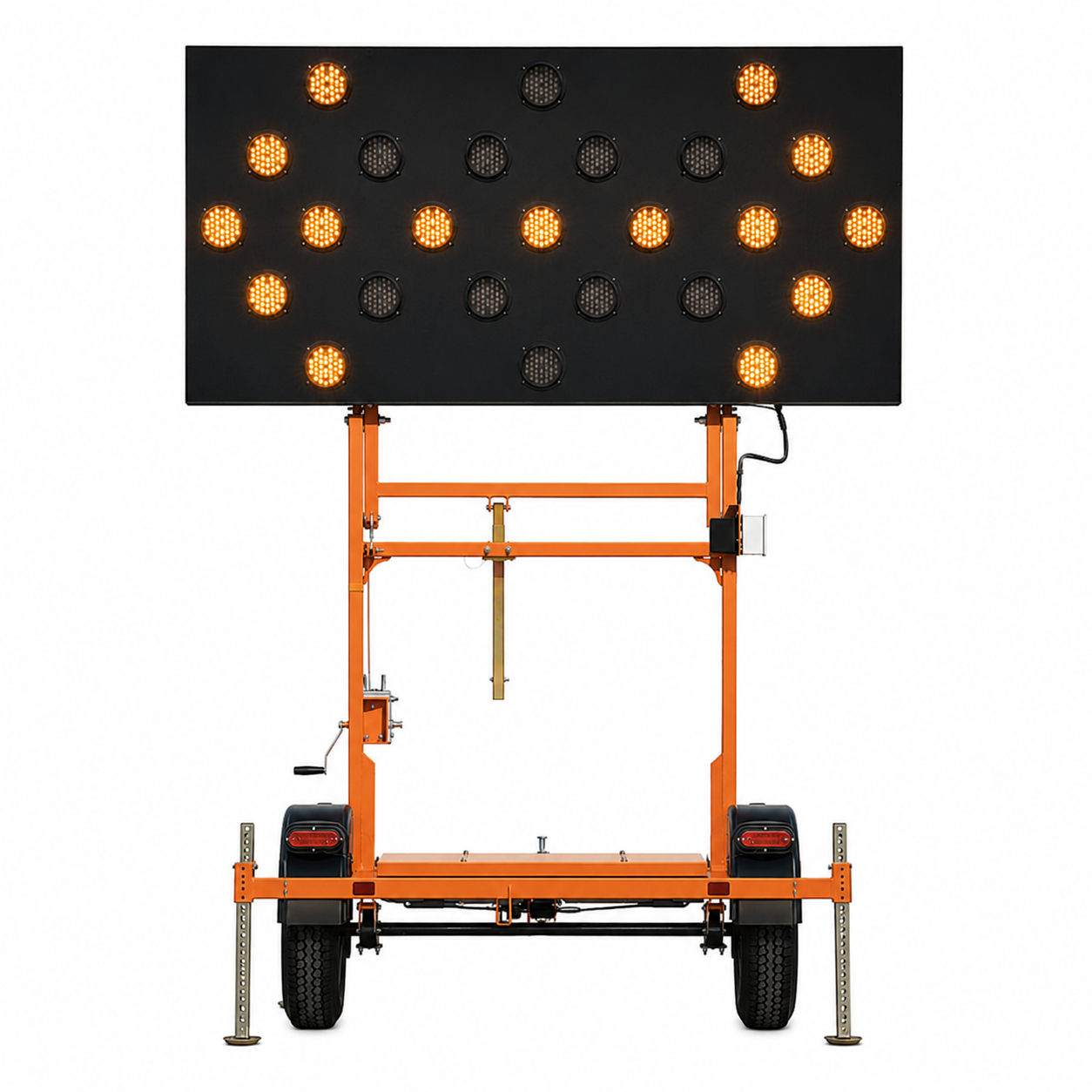
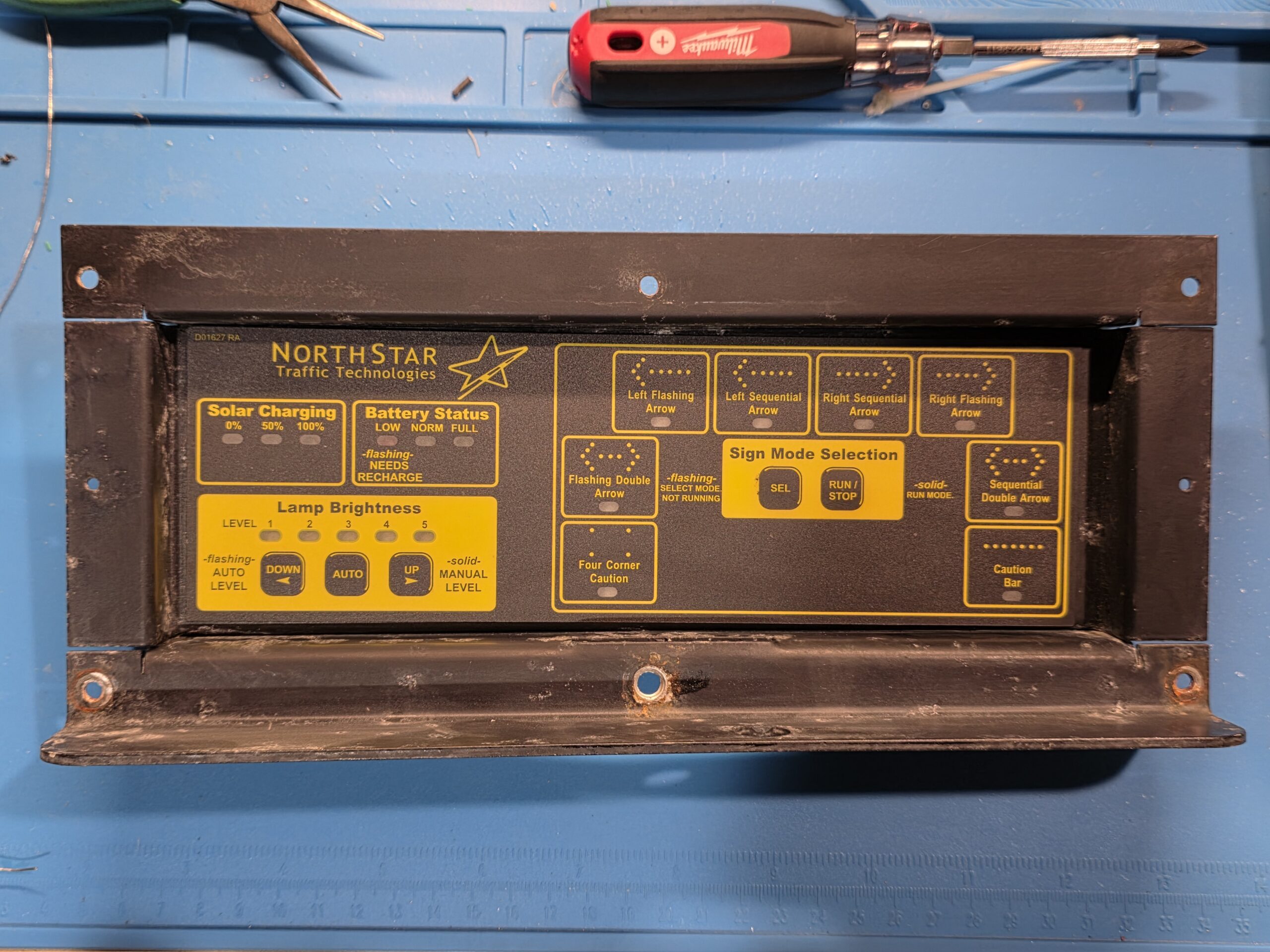
This week I had another repair come in from construction equipment- a Northstar Traffic Technologies arrow board control PCB, marked IDERs 11027.
The board came out of a 2002-era traffic arrow board that had spent its entire life outdoors. Between weather exposure, moisture, and vibration, the PCB was in rough shape and showed clear signs of long-term environmental damage.
Normally, I would recommend replacing a board like this instead of repairing it. However, since the manufacturer is no longer in business, repair was the only viable option.
Initial Inspection and PCB Cleaning
The first step in any traffic control PCB repair is getting the board cleaned enough to properly inspect it. I used isopropyl alcohol and a toothbrush to remove corrosion, oxidation, and surface contamination.
Once cleaned and dried, the damage became much more obvious. Nearly every trace showed some level of corrosion, and I immediately found 5 open traces by eye, with another 3 identified under magnification.
Arrow Board PCB Trace Repair Process
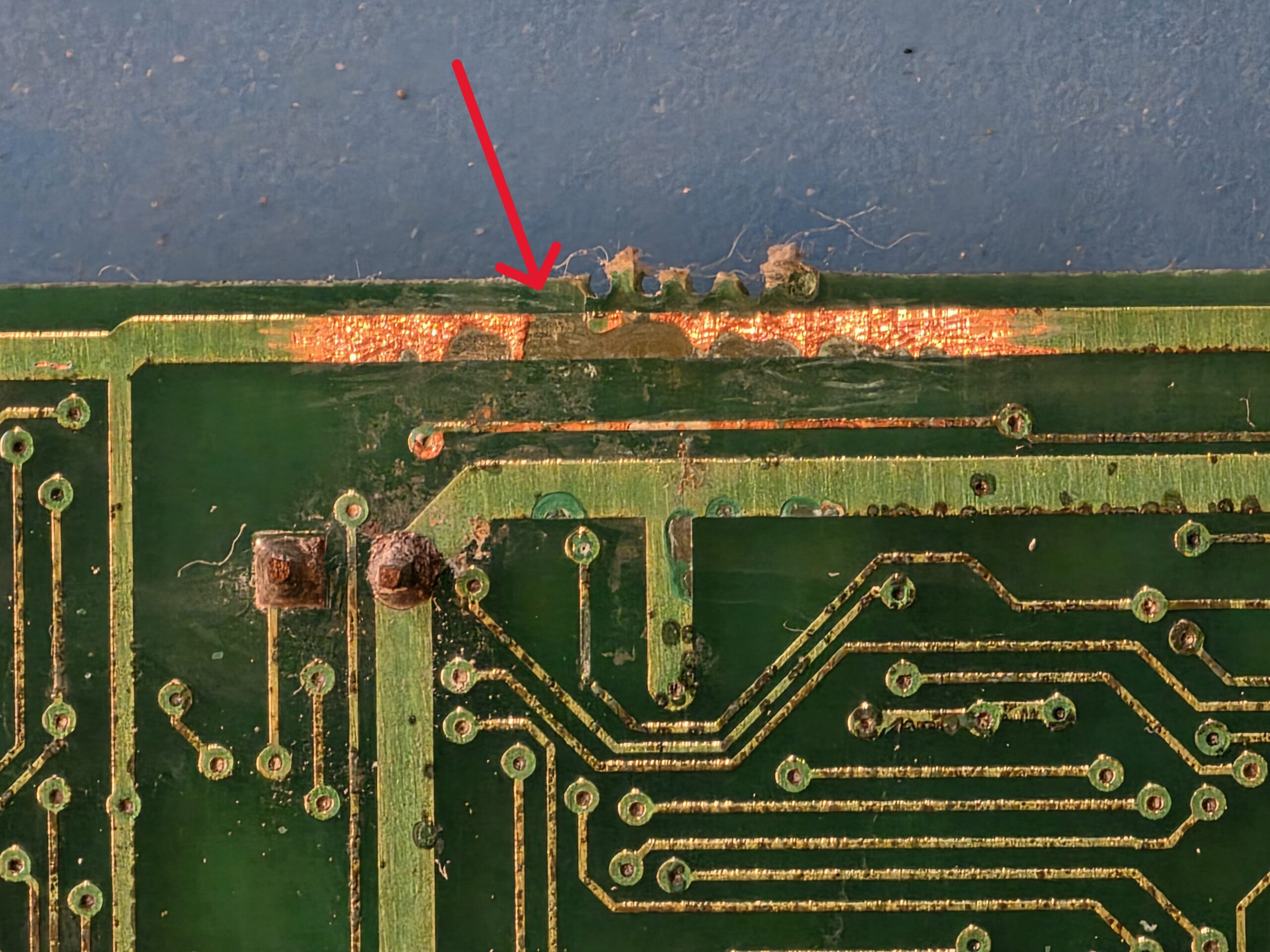
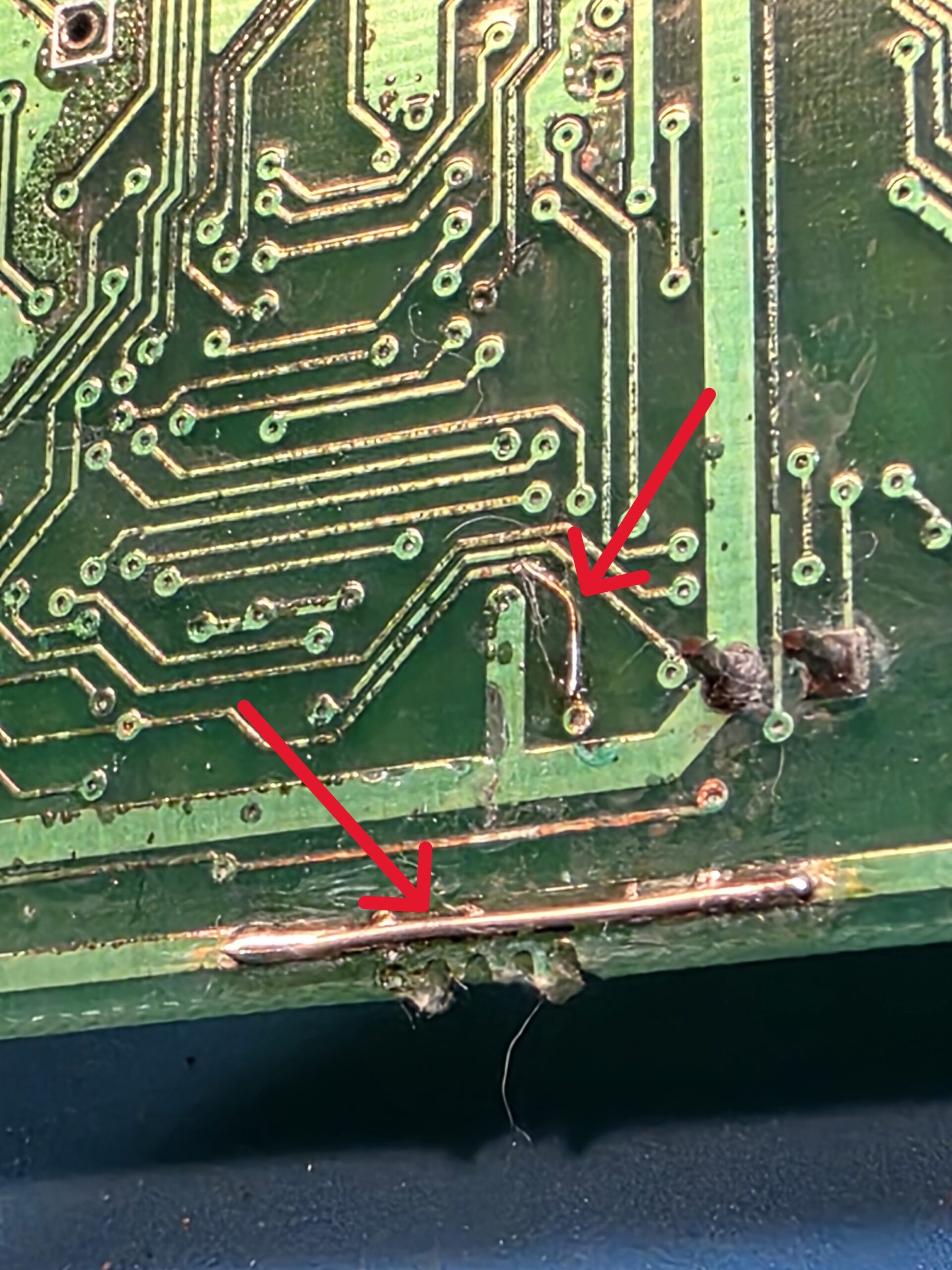
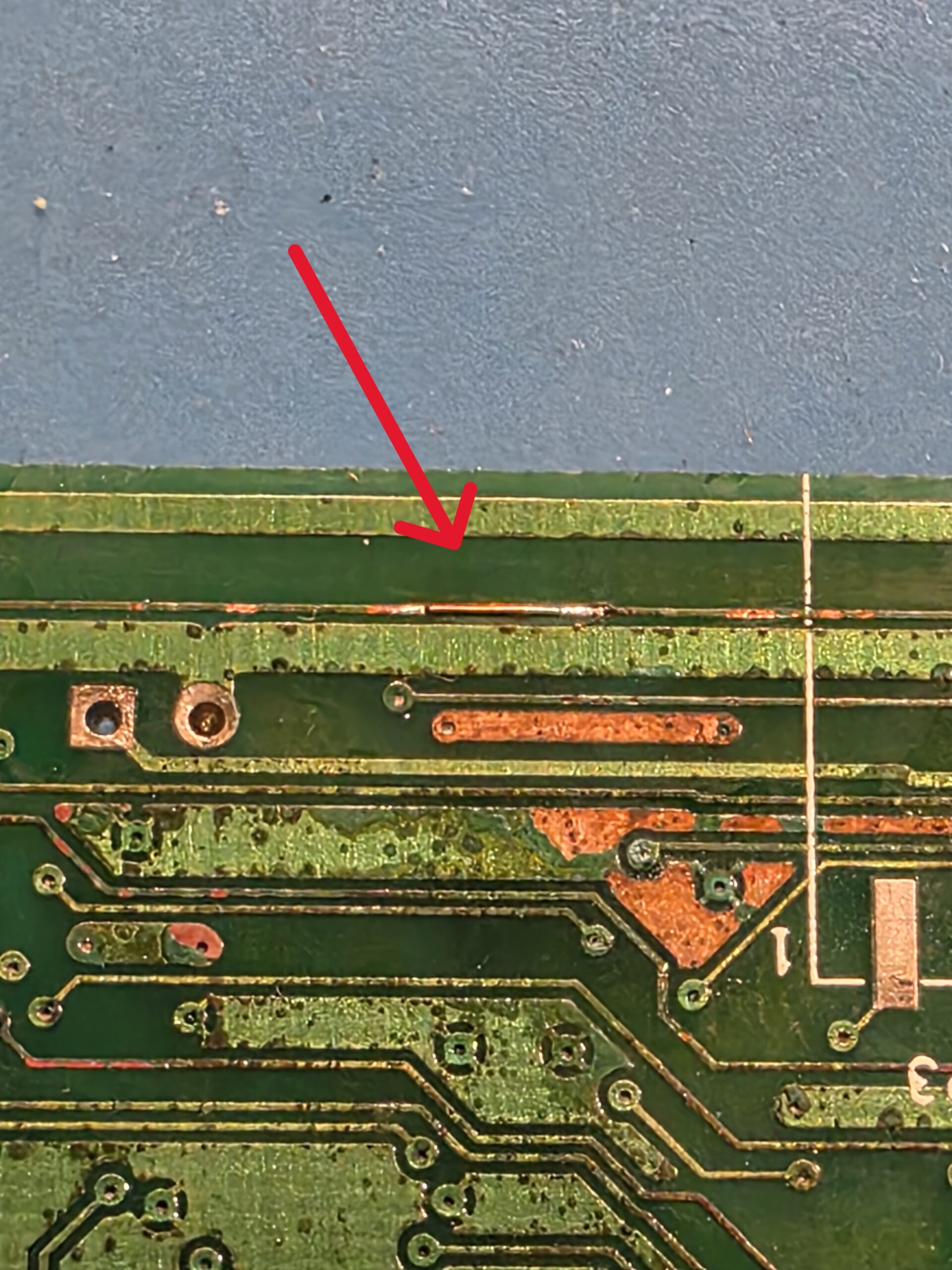
For PCB trace repair work like this, I typically use Kynar wire as I’ve had great success and it’s readily available. I prefer to get mine on eBay as you can get it in different colors and lengths at a reasonable price. In this case, some traces were so small that I also had to use individual strands pulled from multi-conductor wire.
This type of repair is slow work. I spent a significant amount of time continuity testing each section of the board to ensure every open trace was found and repaired correctly.
Electrical Testing and Power-Up
Because I did not have the original arrow board system available, full functional testing was not possible.
Instead, I analyzed the circuit layout to identify likely power input points and operating voltage. Most construction equipment electronics of this type run on 12V systems, so that was used as the baseline for testing.
After powering the board carefully, I observed normal response behavior from the circuit, indicating that the repairs were successful within the limits of available testing.
PCB Protection with Conformal Coating
Once all repairs were complete, I masked off the connectors and applied acrylic conformal coating to protect the repaired traces from future moisture and corrosion.
This is especially important for traffic control equipment PCBs that operate in constant outdoor environments.
Acrylic conformal coating used for this PCB repair
Final Reassembly and Results
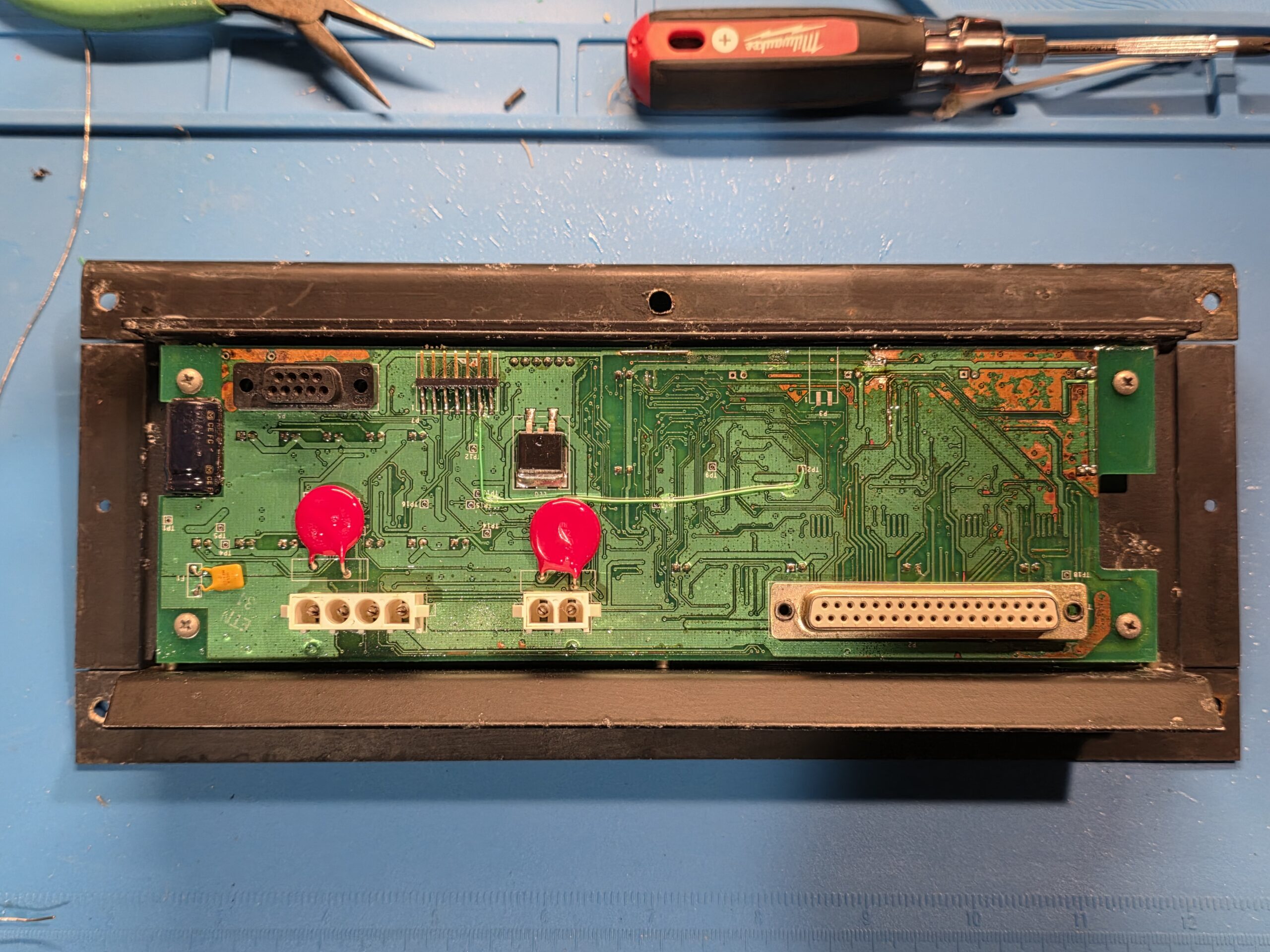
After curing, the board was reassembled and prepared for return to service.
Given the level of corrosion and the number of open traces, this was a time-intensive repair, but all faults were successfully corrected and verified through continuity testing.
Conclusion: Arrow Board PCB Repair Success
Repairs like this are a good example of why component-level troubleshooting still matters. When replacement boards are unavailable, careful PCB trace repair can extend the life of otherwise obsolete equipment.
More electronics and construction equipment repairs can be found at Bench and Build.