
How We Built a DIY Accent Wall to Transform Our Master Bedroom
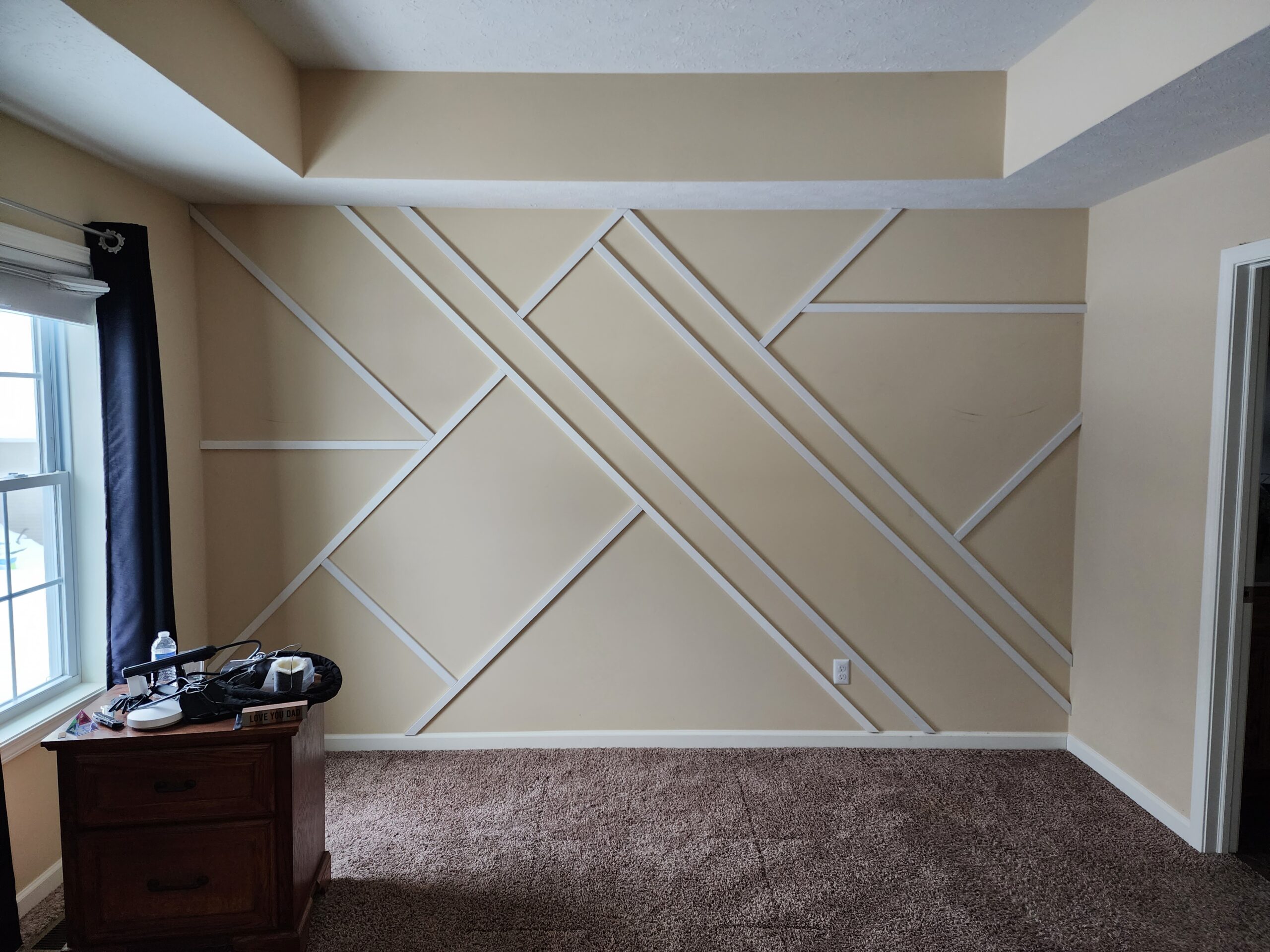
Adding character, depth, and a focal point to an otherwise bland room. Our master bedroom was nice — clean, finished, and comfortable — but it felt flat. There wasn’t much to draw your eye, and nothing that really made the room stand out. We wanted to add some visual interest and personality without doing a full renovation. The solution was a DIY accent wall using simple 1×2 MDF trim and paint. The transformation completely changed how the room feels, turning it from bland to intentional.
Why an Accent Wall?
Before the accent wall, the room lacked a focal point. Everything blended together, and while it was pleasant, it didn’t feel finished. An accent wall adds:
- A clear visual anchor
- Depth and texture
- Character without overwhelming the space
- A custom look at a relatively low cost
This project was all about getting maximum impact with minimal materials.
Design Approach
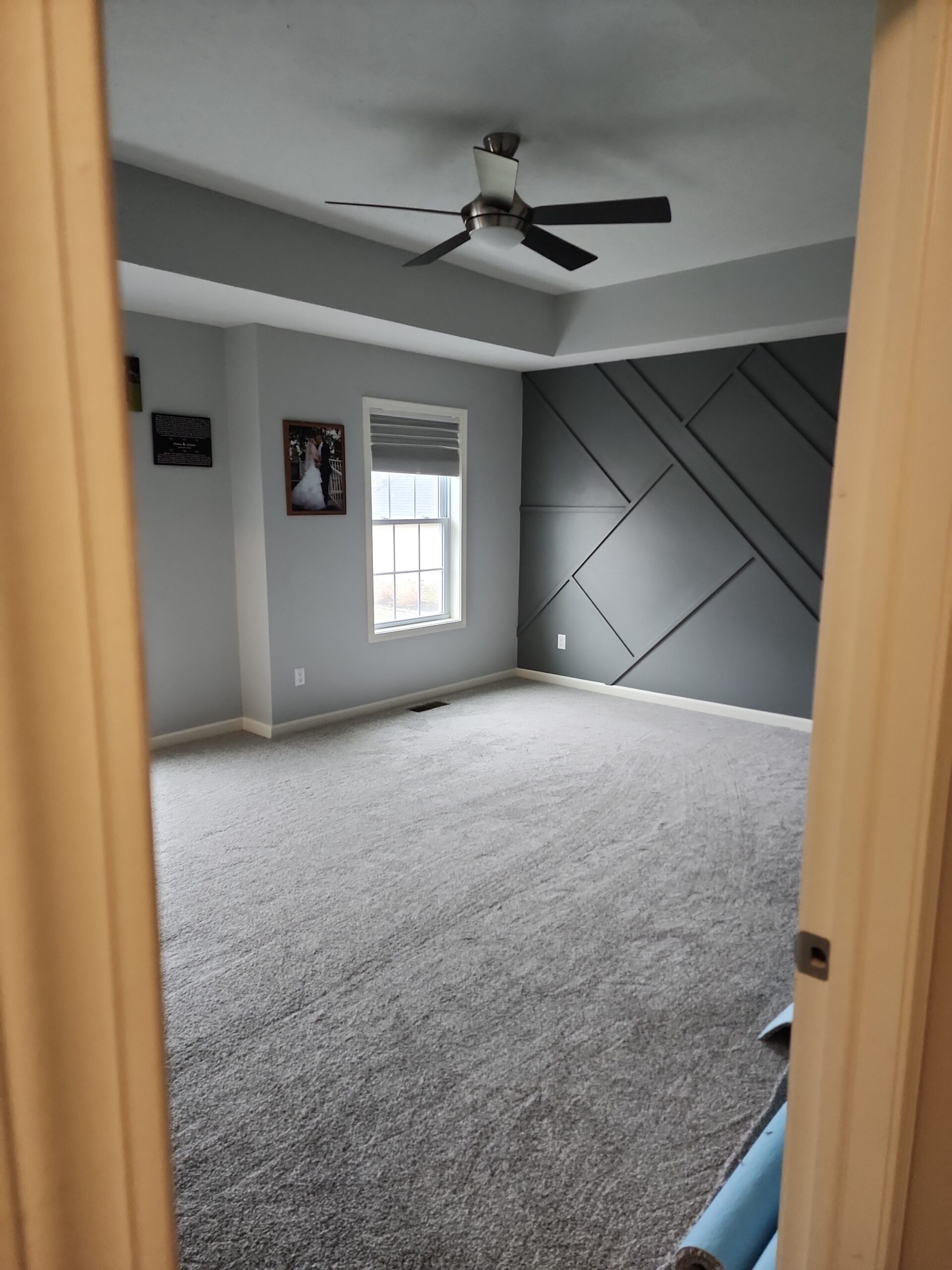
We kept the design clean and symmetrical, using 1×2 MDF boards to create subtle panel-style detailing. MDF is affordable, easy to cut, and paints beautifully, making it perfect for interior trim projects like this. The layout was measured and planned carefully to keep spacing even and balanced across the wall. Taking the time here makes the finished wall feel architectural rather than decorative. We looked online to find designs we liked and based ours off of those.
Materials Used
1×2 MDF Boards
Used to create the accent wall pattern. MDF provides straight edges, consistent dimensions, and a smooth paint finish. We used primed MDF to cut out the need to prime the boards before paint.
Paint
A contrasting paint color was used to make the wall stand out while still complementing the rest of the room.
Fasteners
16 gauge nails & nail gun were used to secure the trim cleanly to the wall.
Tools Used
Cutting & Measuring
- Sliding miter saw — cutting trim to exact length
- Tape measure — layout and spacing
- Laser level — keeping lines straight and consistent
- Stud Finder — Nail the MDF into studs
Installation & Finishing
- Brad nailer or finish nailer
- Caulking gun
- Paint rollers and brushes
Safety Gear
- Safety glasses
- Ear protection
Step by Step Build Process
1. Measure and Plan the Layout
The wall was measured and the trim layout was planned to keep spacing even and centered. This step is key to making the wall look professional.
2. Cut the MDF Trim
All 1×2 MDF boards were cut to size using a sliding miter saw to ensure clean, consistent joints.
3. Install the Trim
The boards were attached directly to the wall using 16 gauge nails, checking alignment with a laser level throughout the process.
4. Caulk, Paint, and Touch Up
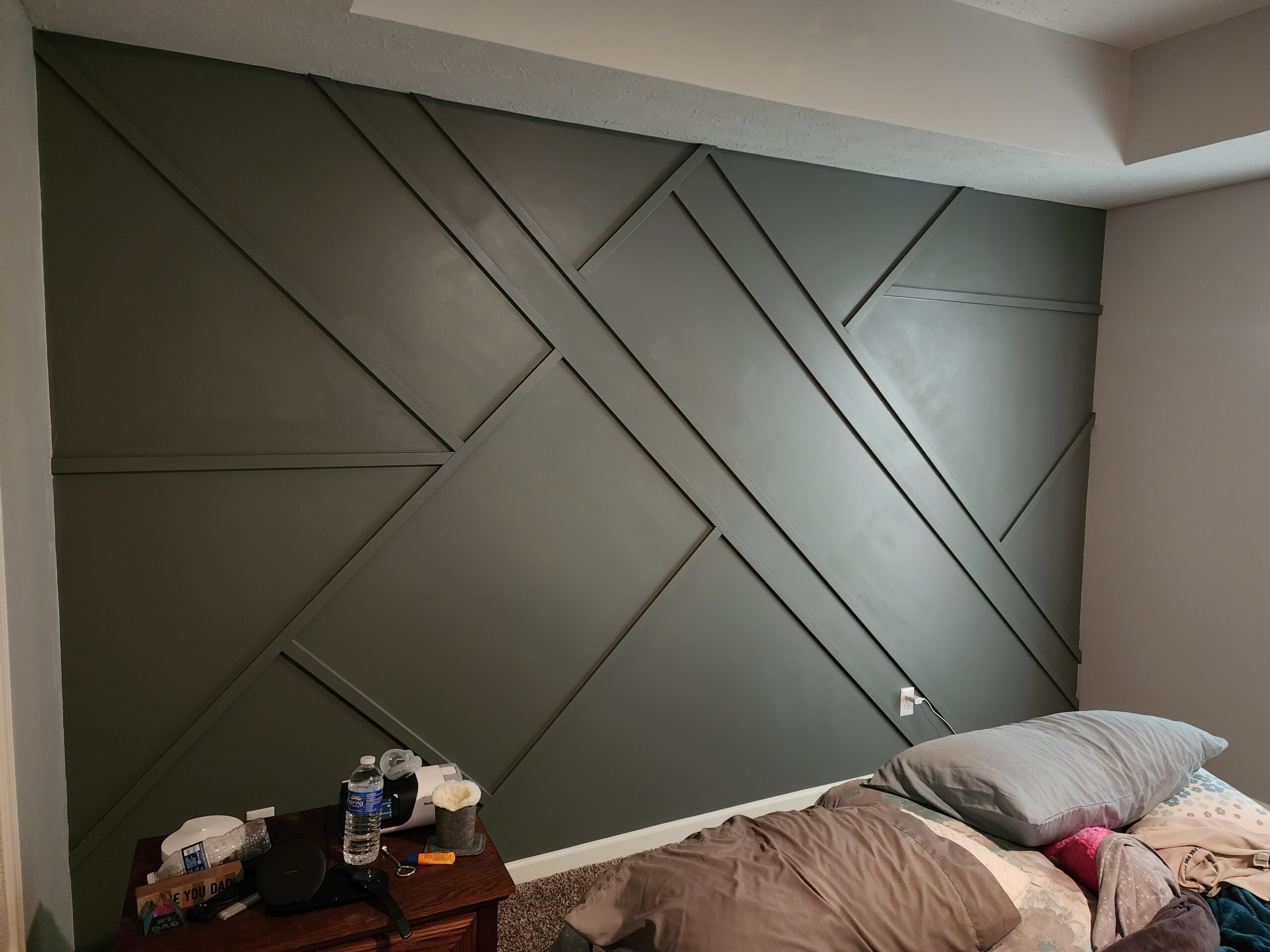
Once the trim was installed, seams were caulked and the entire wall was painted. This step pulls everything together and hides fasteners for a seamless finish.
The Transformation
The difference after painting was immediate. The wall went from flat and forgettable to a clear focal point that anchors the entire room. The trim adds subtle depth, while the color brings contrast and personality without overpowering the space.
Cost vs Impact
This project delivers one of the best returns on effort and cost:
- MDF trim is inexpensive
- Paint costs are minimal
- Labor is straightforward DIY work
The end result looks custom and high-end without the price tag of wallpaper or professional millwork.
Why This Accent Wall Works
- Adds character without clutter
- Works with modern, traditional, or transitional styles
- Customizable to any wall size
- High visual impact for low cost
Final Thoughts
This accent wall completely changed the feel of our master bedroom. What was once a nice but bland space now has a focal point that feels intentional and designed. If you’re looking for a way to upgrade a room without a major renovation, a DIY accent wall is one of the most effective improvements you can make.