
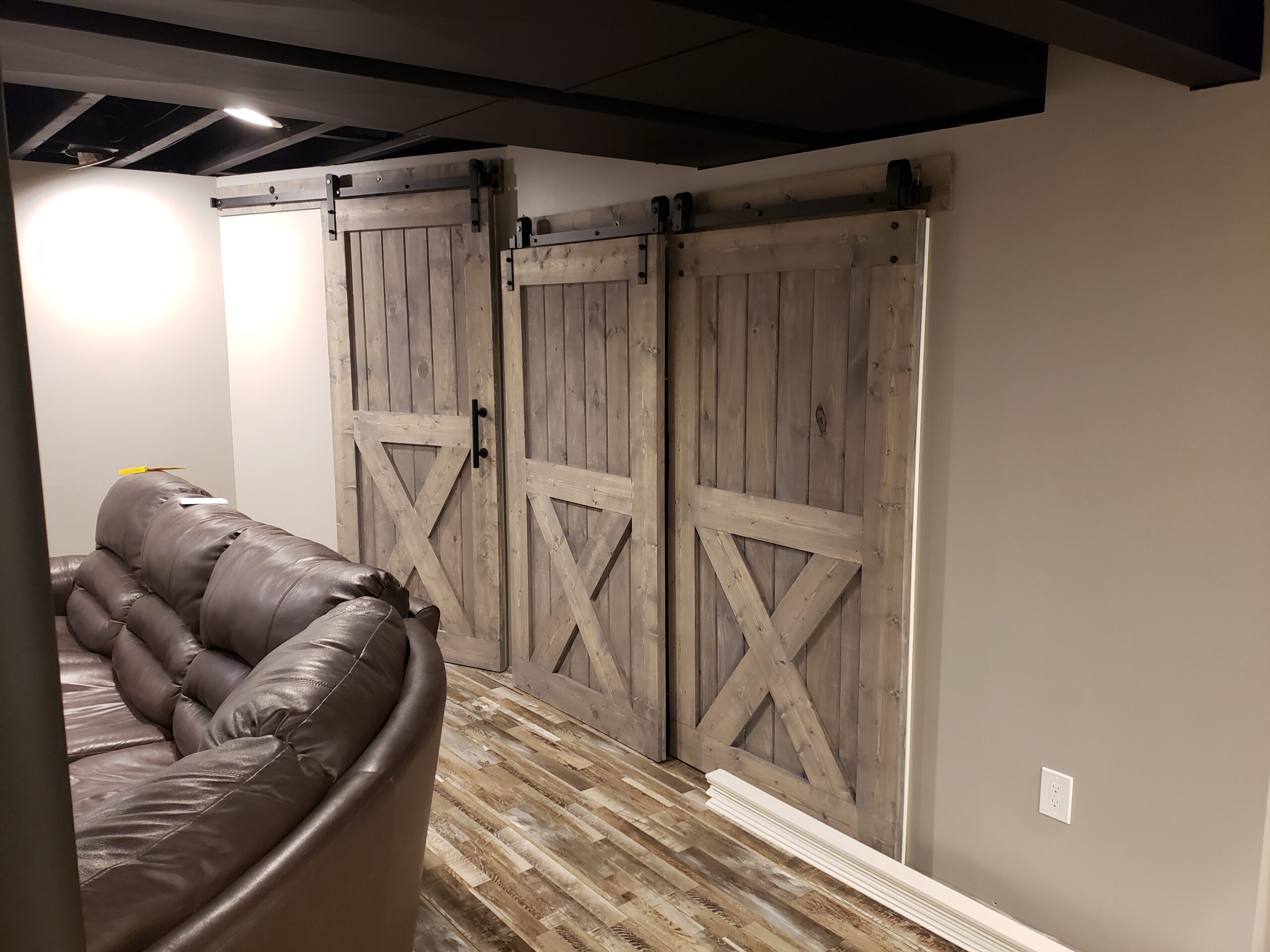
How to Build a Sliding Barn Door (DIY Step by Step)
Barn doors are one of those projects where you can click “Buy Now” and have something delivered in a week… but you usually end up compromising on size, style, or quality
That was exactly my problem.
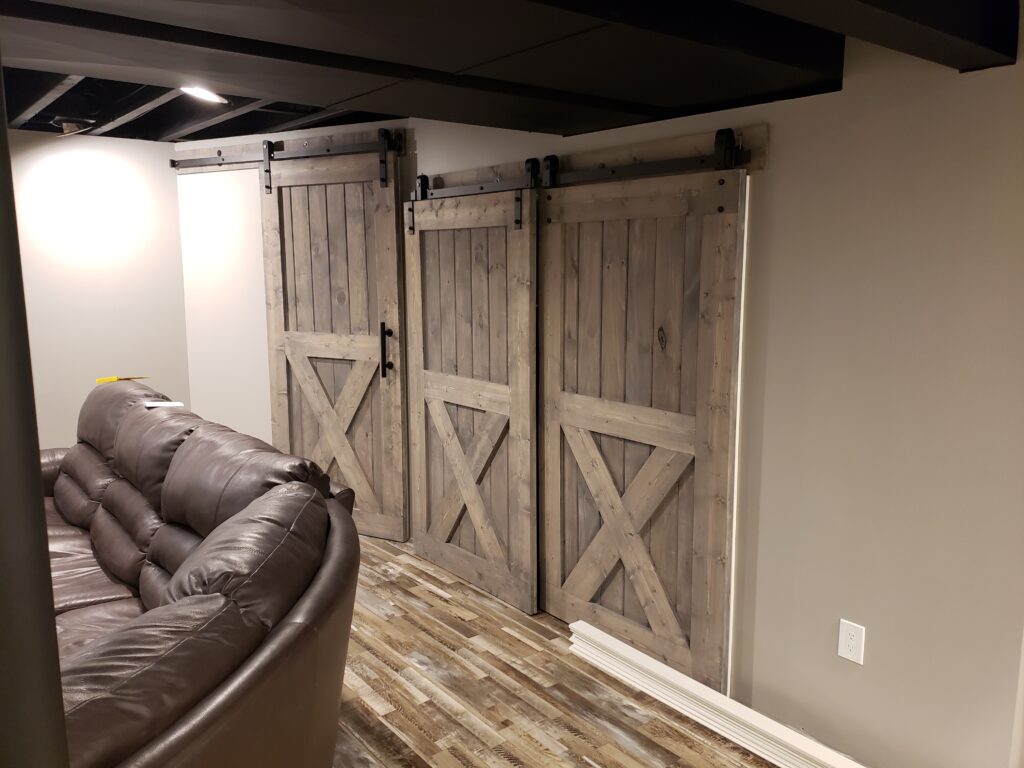
I needed a total of six matching doors:
- 4 sliding barn doors
- 2 swing-open doors to match
And the bigger issue wasn’t just looks… it was function.
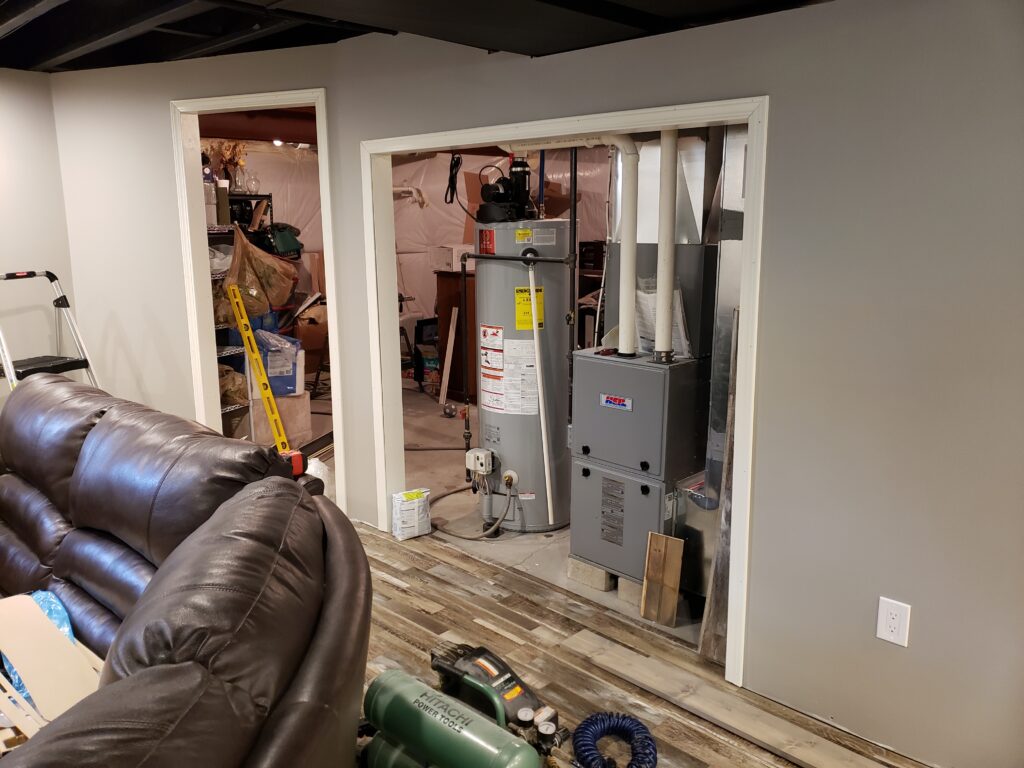
One of the main areas I wanted to cover was my furnace and hot water tank, but I didn’t want to create a situation where they were annoying (or impossible) to access later. You never know when something needs to be serviced or replaced, and I wanted to make sure they were not a pain to get to.
This post walks through the entire process: planning, sizing, building the doors, staining, and mounting the hardware, including bypass barn door hardware.
Tools & Materials Used
This project is very doable with basic tools, but it goes a lot smoother if you have a few key items on hand before you start. Check out My Toolbox to see my commonly used tools.
Tools
- Miter saw (for trim angles & cutting boards to size)
- Circular saw (for trimming the door square if needed)
- Drill/driver
- Kreg Jig + drill bit (for building the face frame)
- Measuring tape
- Speed square or framing square
- Laser level (highly recommended for the header board + rail)
- Saw horses
- Clamps (you’ll need more than you think)
Materials
- 1 in. x 6 in. x 8 ft T&G Pine Pattern Board (main door surface)
- Standard pine boards (for trim + “X” pattern)
- Wood glue
- 1 1/4″ softwood Kreg pocket hole screws (for the face frame)
- Drywall screws (for attaching trim boards)
- Stain (this is what I used) + optional pre-stain conditioner
- Barn door hardware + handles (including bypass hardware if needed)
- Lag bolts (for mounting the header board)
- Black spray paint (optional, for bolts to match hardware)
Tip: If you’re doing multiple doors like I did, buy extra stain and extra boards from the same batch. It helps keep the color and grain looking consistent across the whole project.
Why I Built These Instead of Buying Them
I probably could have ordered doors online, but I would’ve been dealing with at least one of these problems:
- Doors that didn’t match the exact style I wanted
- Doors that didn’t fit my openings correctly
- Hardware that didn’t match the look
- No way to guarantee everything would match across six doors
Since this was a big visual part of the space, I wanted them all to look like they were designed together, not pieced together over time.
Step 1: Research the Door Style You Want
Before I touched a single tool, I spent a ridiculous amount of time looking at different barn door designs.
There are so many options that you can easily spend hours bouncing between:
- Traditional “X” barn style
- Modern chevron style
- Shiplap look
- Flat panel
- Mixed stain + paint combos
- Raw rustic
Header board vs no header board
While you’re researching, decide early if you want to mount your sliding rail directly to the wall or use a header board.
We chose to go with a header board to make mounting easier. It gave me flexibility for stud placement and helped everything look more intentional.
Step 2: Choose Hardware First (Especially for Bypass Doors)
This is one of the biggest mistakes people make: they build the door first, then buy hardware, then realize the hardware doesn’t work with their design.
People usually run into issues like:
- The mounting height is different than expected
- The rail needs to be longer than planned
- The door thickness doesn’t work
- The handle placement hits the rail or the other door
- The door overlaps wrong
In my case I also needed bypass sliding door hardware, which adds even more variables.
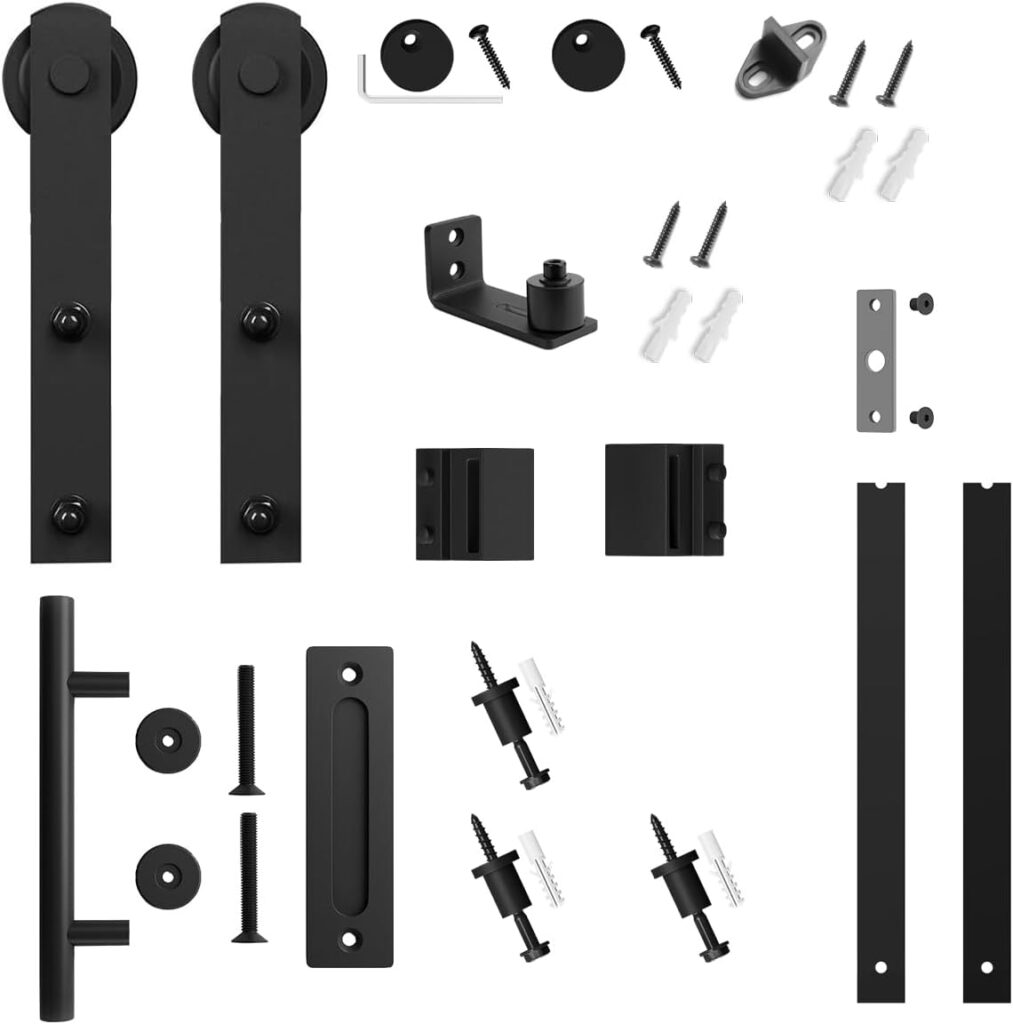
So before finalizing door sizing, I made sure I had matching:
- Rails
- Rollers/hangers
- Handles
- Floor guides
- Bypass-specific hardware where needed
Step 3: Measure Your Doors the Right Way
Once hardware was chosen, I moved on to sizing. This is where you want to slow down and double-check everything.
Measure the opening AND the trim
In most cases, you don’t want the door sized to the bare opening. You want it to cover the opening plus overlap the trim so it looks clean when closed.
Check hardware mounting height
Some hardware setups require the door to be taller depending on the roller design, how the rail mounts, and the clearance needed above the opening.
I measured the opening, checked the hardware instructions, and adjusted the door height accordingly.
Don’t forget header board length
If you’re using a header board, it needs to be long enough to support:
- Full rail length
- Proper spacing for door travel
- Stops on both ends
Step 4: Draw Your Design + Make a Cut List
Once I had my final door sizes, I sketched out the design and made a cut list. This step saves a lot of frustration later because once you start building, you don’t want to be stopping every 10 minutes to do math.
Step 5: Build the Door Panels (T&G Boards)
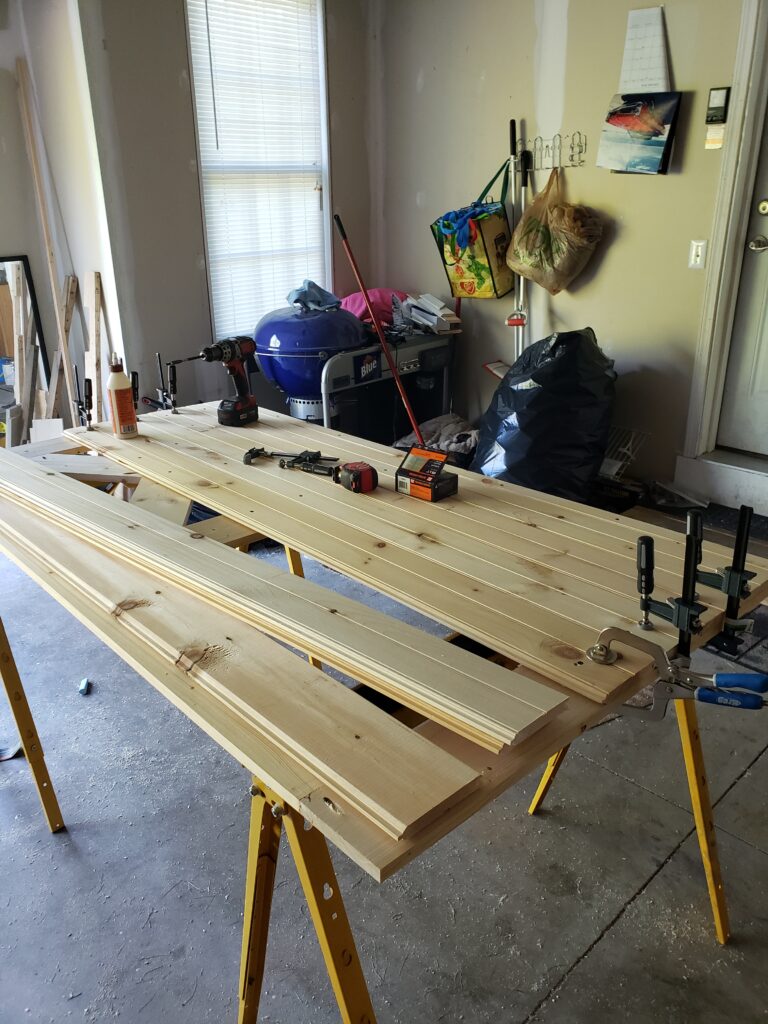
I set everything up on saw horses so the door was at a comfortable working height. Then I started assembling the main door panel using the tongue and groove pine. The boards were cut to the required length prior to gluing.
Glue makes a big difference
I used wood glue between each T&G joint to keep everything tight and stable long-term. Even though the boards interlock, the glue helps prevent gaps from forming later.
Keeping the door square
Before the glue dried, I checked the door for square using a framing square and by measuring diagonals corner to corner.
If it’s off slightly, it can always be trimmed later with a circular saw, but it’s much easier to get it close now.
Step 6: Build the Face Frame With a Kreg Jig (No Visible Screws)
This is one step I’m really glad I did.
Before attaching the trim boards to the front of the door, I used a Kreg Jig and 1 1/4″ softwood Kreg screws to build the face frame first. You can see the pocket holes in the above photo if you look closely.
That way, all the pocket holes and screws are on the back side of the frame, and you don’t see any screw heads on the front of the door.
Once the frame was assembled, I attached it to the T&G panel using wood glue and clamps.
Step 7: Clamp Everything Tight While It Dries
This project is what finally justified buying more clamps.
I grabbed a bunch of these Harbor Freight bar clamps specifically for this build:
And yes, you’ll need more than you think. The goal is to keep everything pulled tight while the glue dries.
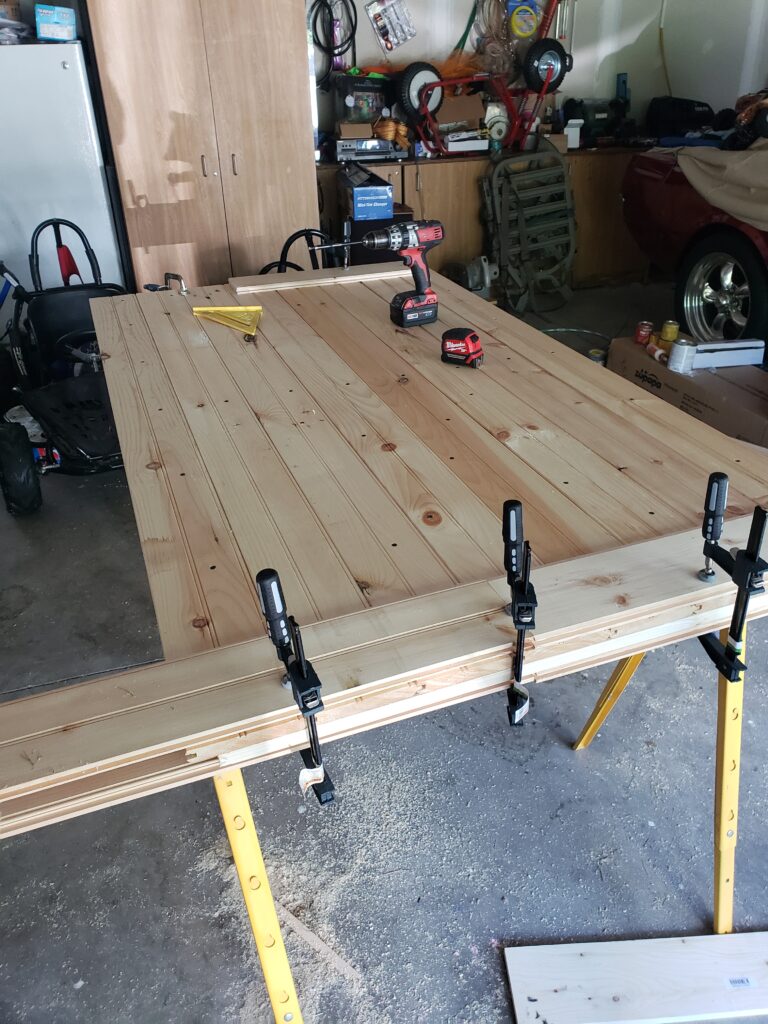
Step 8: Use a circular saw and saw guide to trim the door to size.
Once the main door panel was dry and the face frame was attached, I used a circular saw guide to trim the door to size. I cut just enough to make the face frame and T&G flush.
Pro tip: accuracy matters
This is where a good saw setup matters. If you’re off by even a small amount, your trim boards won’t meet cleanly.
Step 9: Drill Holes for Hardware and Handles BEFORE Staining
This is one of those steps that saves you from a lot of regret later.
Before staining, I drilled the handle holes and hardware mounting holes. That way I didn’t have to drill through finished stain and risk chipping, tear-out, or needing touch-up spots.
Step 10: Test Stain Colors (Scrap Wood is Your Friend)
While the doors were drying, I ran stain tests on scrap wood. I tested multiple stain colors with and without pre-stain conditioner.
Once I found the look I liked, I bought enough stain for the full project (since I was doing six doors total).
Step 11: Stain the Doors + Header Boards
Once everything was assembled and holes were drilled, I stained all the doors and all the header boards.
Then I let everything dry for multiple days until it was no longer tacky.
This matters a lot, because if you install hardware too early, you can end up with fingerprints, stain rubbing off, or uneven finish under the hardware.
Everything in my photos was done in Varathane Carbon Gray.
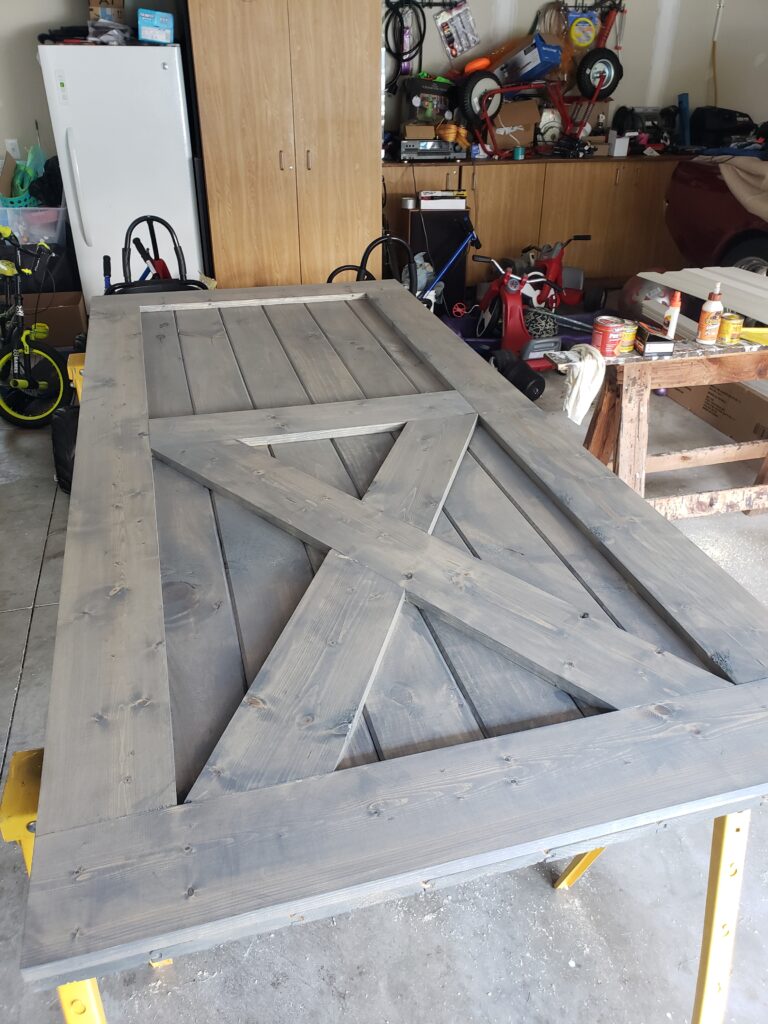
Step 12: Install Hardware on the Doors
Once the stain was fully dry, I installed the barn door hardware on the doors. This made it easier to confirm mounting locations and rail height before drilling anything into the wall.
Step 13: Mount the Header Board
For the header boards, I used lag bolts. To keep the look consistent, I painted the lag bolts black so they matched the rest of the hardware.
I used my laser level to make sure everything was perfectly level before tightening it down.
Step 14: Mark Rail Holes AFTER the Header Board Is Mounted
This was one of the biggest “do it right” steps in the whole project.
I didn’t drill rail holes into the header board ahead of time. Instead, I:
- Mounted the header board first
- Put the door next to it with hardware attached
- Confirmed exact roller position
- Marked the rail hole locations
- Drilled only after confirming alignment
That way, everything lined up exactly with the door hardware.
Step 15: Mount the Rail and Hang the Door
Once the rail was mounted, I installed the door. At this point, the project finally starts looking real.
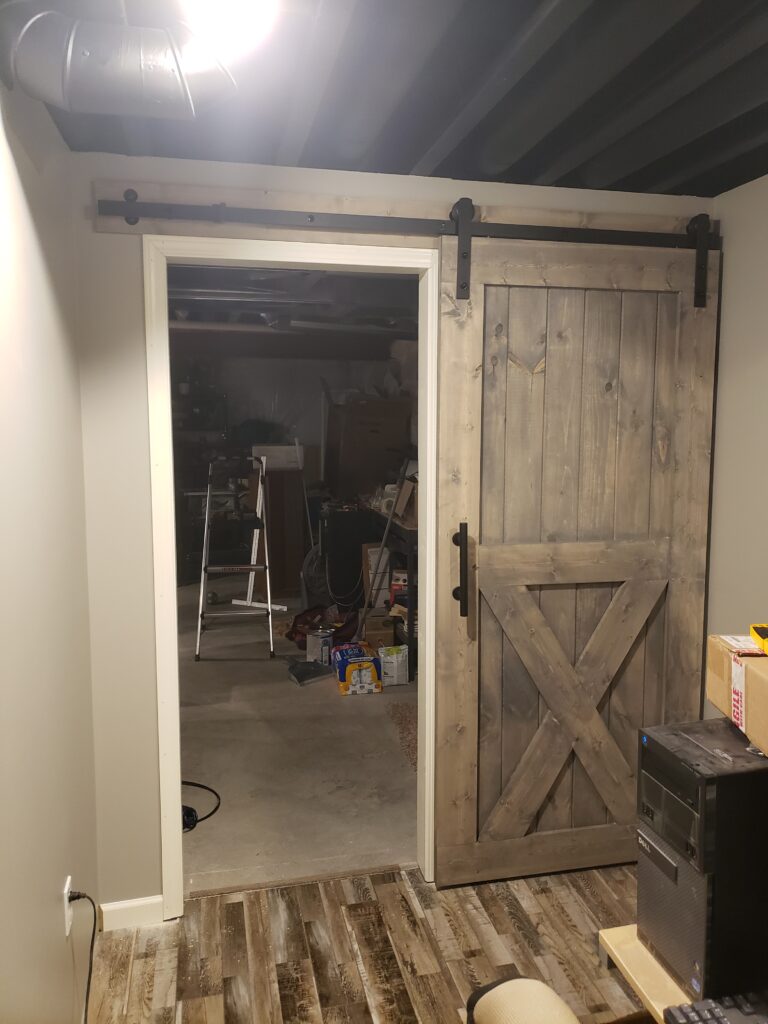
Step 16: Adjust Stops and Guides
After the door was hanging, I adjusted the bump stops so the door stopped in the right spot without sliding off the rail. I kept my door adjusted to make sure we cannot accidentally close the door on our cats.
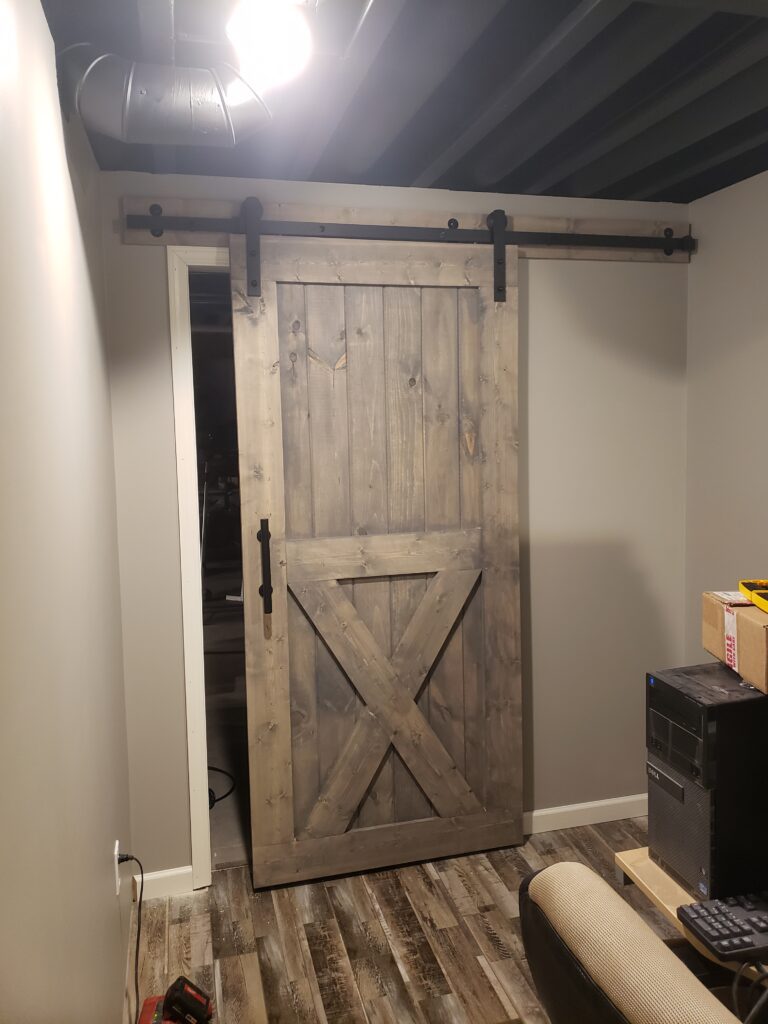
Final Thoughts (and Why This Was Worth It)
This was a longer project than buying doors online, no question.
But I ended up with:
- Doors that matched exactly
- A style we actually wanted
- Hardware that worked for my layout
- Clean access to the furnace and hot water tank
- Six doors that look like they were made as a set
And the best part is: the system still gives me access to everything behind the doors without making maintenance a nightmare.