My DIY Electronics Toolbox
This page is a running snapshot of the tools I actually rely on for electronic repairs and projects. It isn’t a checklist and it isn’t meant to sell you on anything — it’s simply what’s earned a permanent place on my workbench because they’ve proven their value.
Over the past 15 years of repairing electronics at the component level, I’ve learned that the right tools don’t just make jobs easier, they determine whether a repair is even possible. While the right technique is still required, you still need the right tools for the job.
My Tool Buying Philosophy: Spend Based on Use
When I buy tools, I don’t automatically go for the cheapest or the most expensive option. Instead, I base my spending on how often I expect to use the tool and what I am trying to accomplish.
- High-use tools → I invest in quality
If it’s something I’ll use regularly, I’m willing to pay more for better durability, accuracy, comfort, and reliability. - Occasional-use tools → Mid-range or budget
If a tool only comes out a few times a year, I focus on “good enough” performance without overspending. - Rare-use tools → Budget or borrow
For tools I may only need once or twice, I’ll either buy budget, rent, or borrow rather than invest heavily.
This approach helps me:
- Avoid wasting money on overkill
- Get reliable performance where it matters most
- Build a toolbox that balances cost, quality, and real-world usage
Kaisi S-180 Soldering Mat
Heat-Resistant Silicone Soldering Work Mat
- Kaisi S-180 — I would say this mat is a necessity. Not only does it help dissipate heat when using your hot air rework, it also includes numerous magnetic compartments to keep screw contained. This works wonderful when you take something apart that contains a handful of screws. Cleaning the mat is super simple with a little bit of dish soap and paper towel in the sink. After using them for the first time at work, I knew I needed to order one of my own.
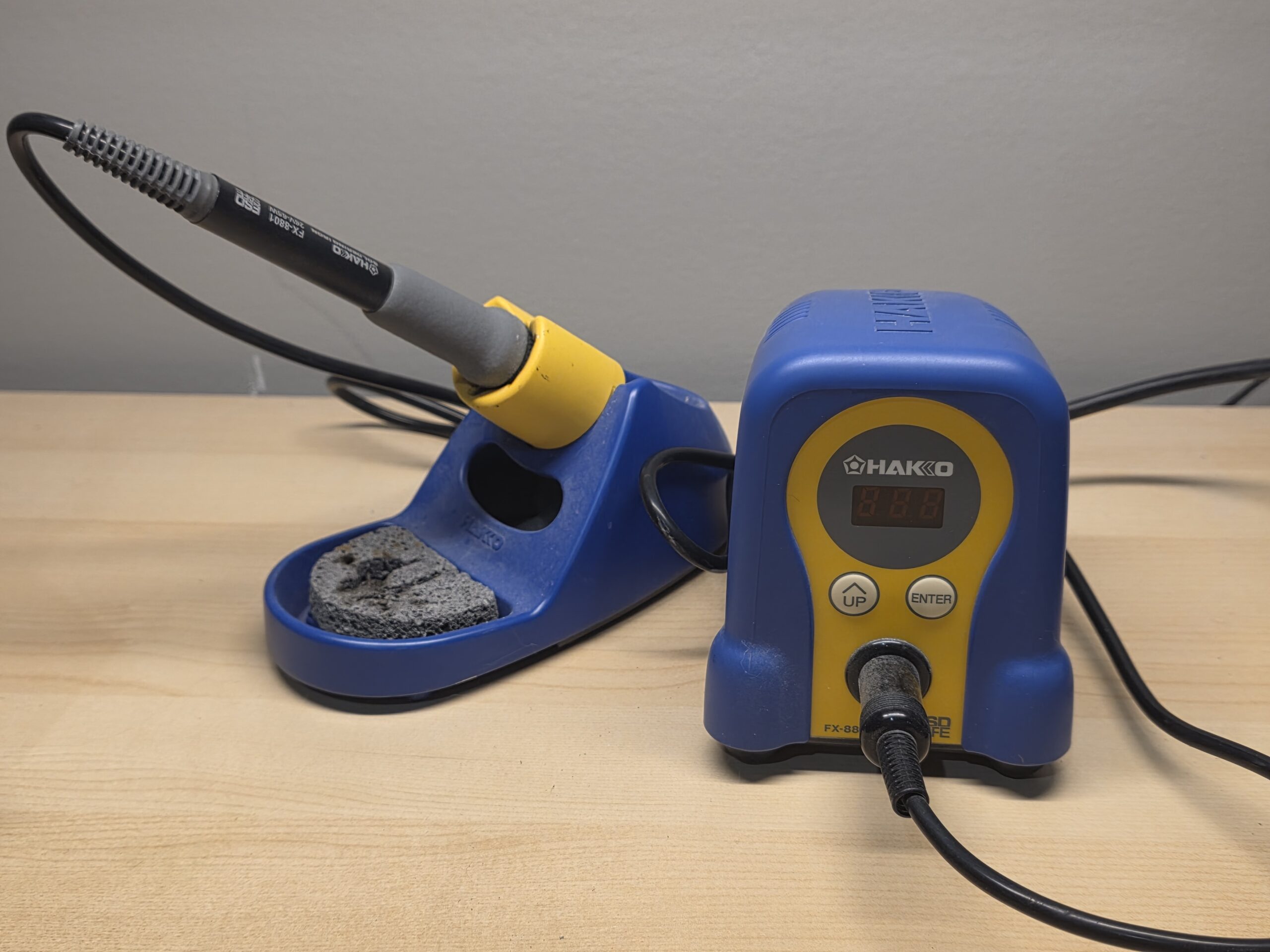
Hakko FX-888D
Precision Digital Soldering Station
- Hakko FX-888D — Yes, you may ask yourself why I have this iron, plus the rework station below. I had purchased this unit before getting the below combo. The Hakko FX-888D just feels natural in the hand for a “cheaper” iron. Theres a wide variety of tips available for different jobs, which makes it a good all-around option. The other reason I add this to my list is because it’s much easier to move this to another area to solder VS the combo unit. The FX-888D was discontinued and replaced with the FX-888DX.
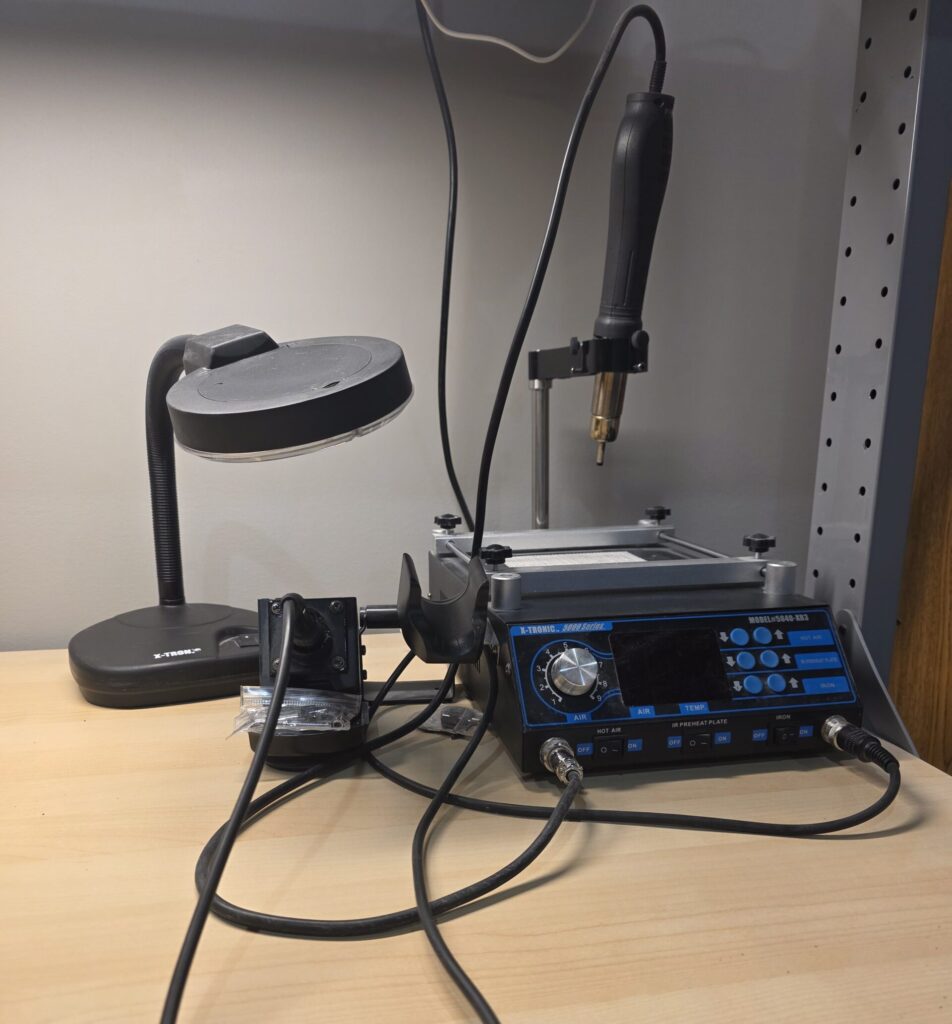
X-Tronic 5040-XR3 Rework Station
Hot Air Rework & Soldering Station with Preheater
- X-Tronic 5040 — This unit wraps up all of the technology I prefer when working on PCB’s with surface mount technology. Raising the temperature of the PCB prior to hitting it with hot air lowers the chances of PCB blister, delamination, pad damage, etc. Having this, the iron, and the hot air in one place certainly adds to the convenience.
X-Tronic Desoldering Station
Desoldering Station
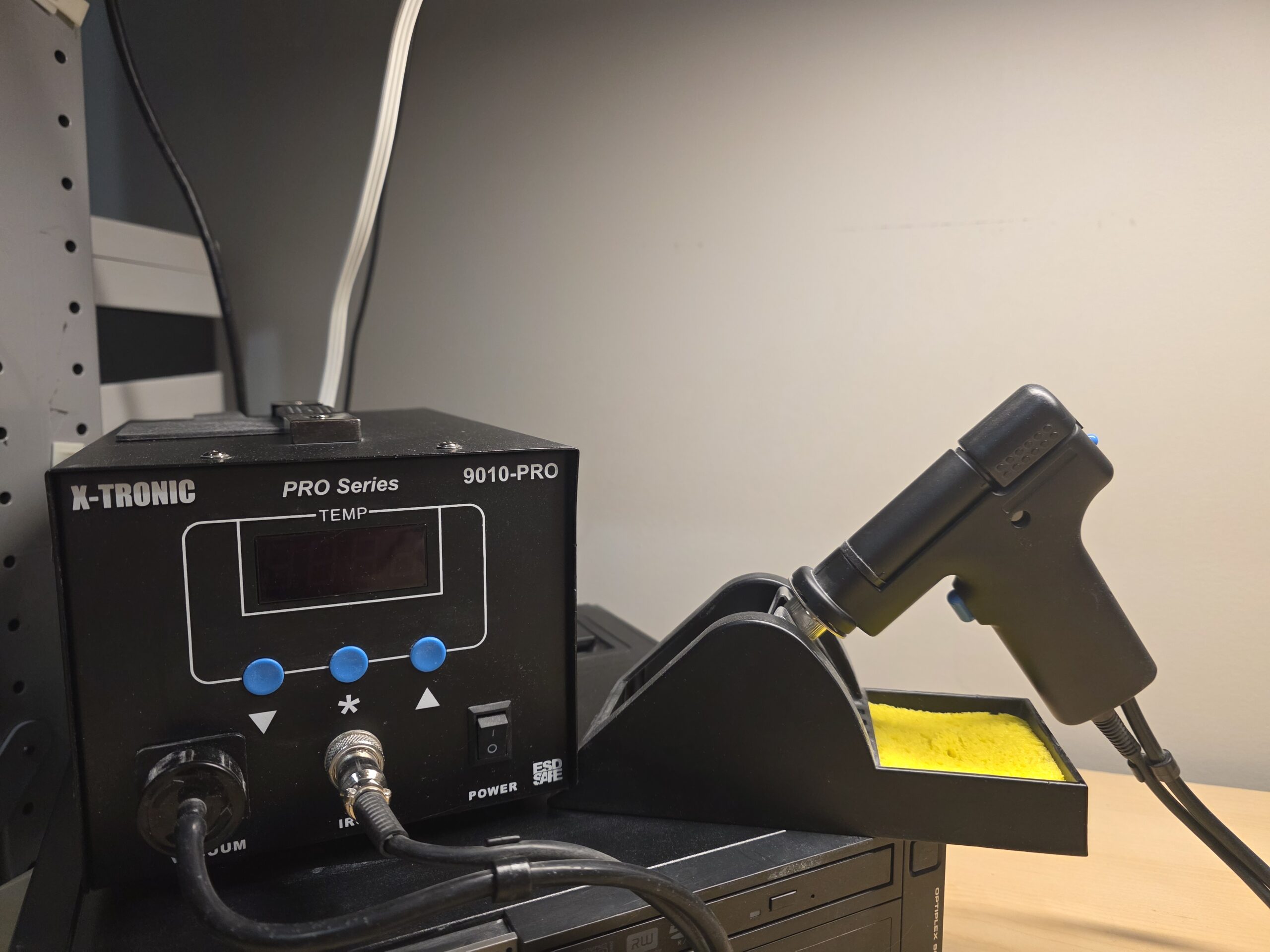
- X-Tronic Desoldering Station — I got spoiled using expensive soldering equipment at work. When working on through hole components at home I knew I needed something more than a cheap solder sucker to clear holes. For the price, this thing is more than worth picking up and eliminates so much frustration. My unit is a rebranded YIHUA 948 and makes desoldering so much more efficient.
Fluke 233 DMM
True RMS Digital Multimeter
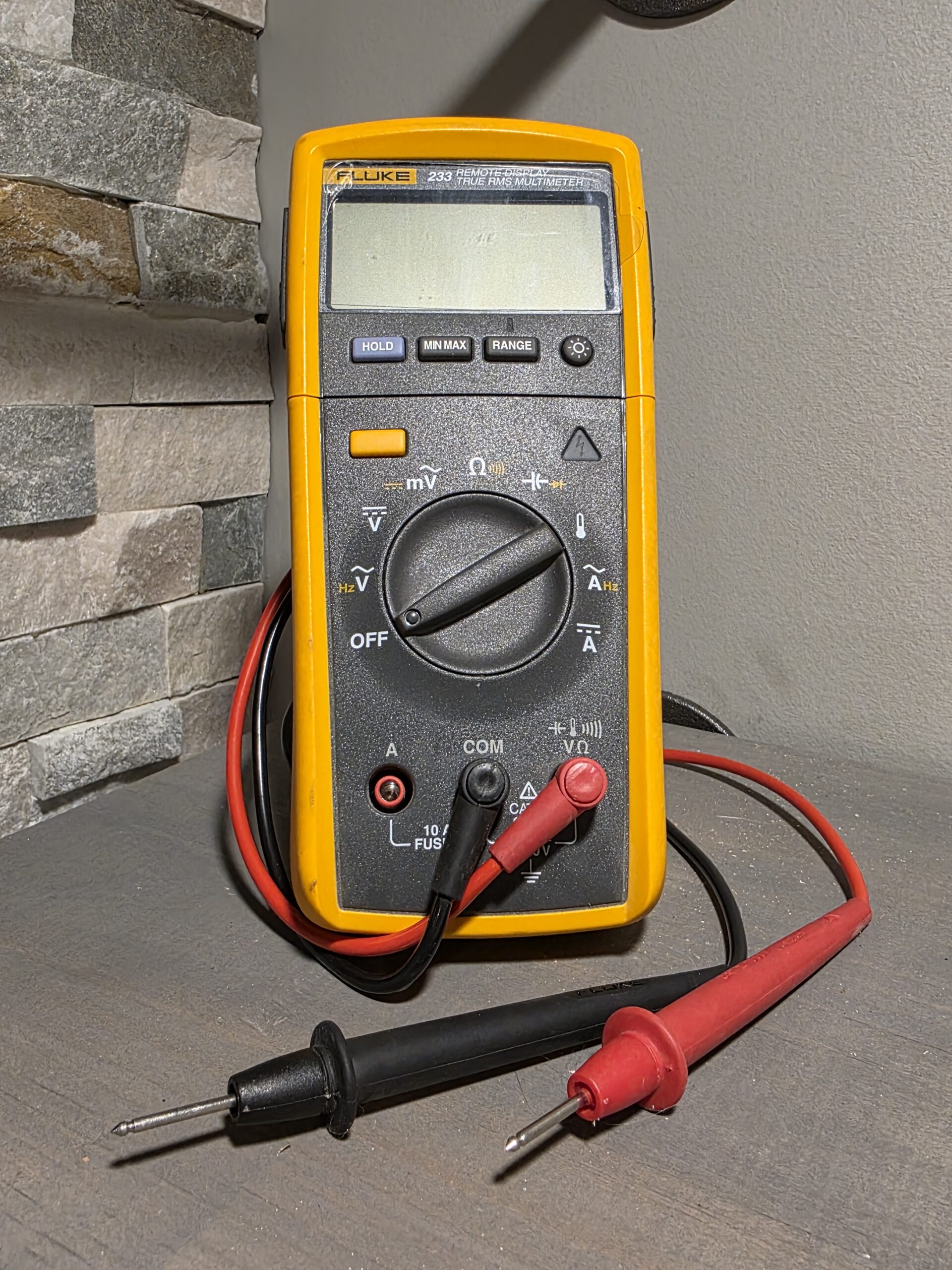
- Fluke 233 DMM — Seeing as I use a meter regularly with home repairs, remodels, as well as electronics repairs & projects I didn’t want to cheap out here. This model works great and the removable display makes home rework easier if you’re trying to make measurements but just can’t see the display well. There are plenty of other good DMM choices out there if you’re looking for a hobbyist meter at a lower price point.
X-Tronic Variable Power Supply with Presets
Adjustable Bench Power Supply
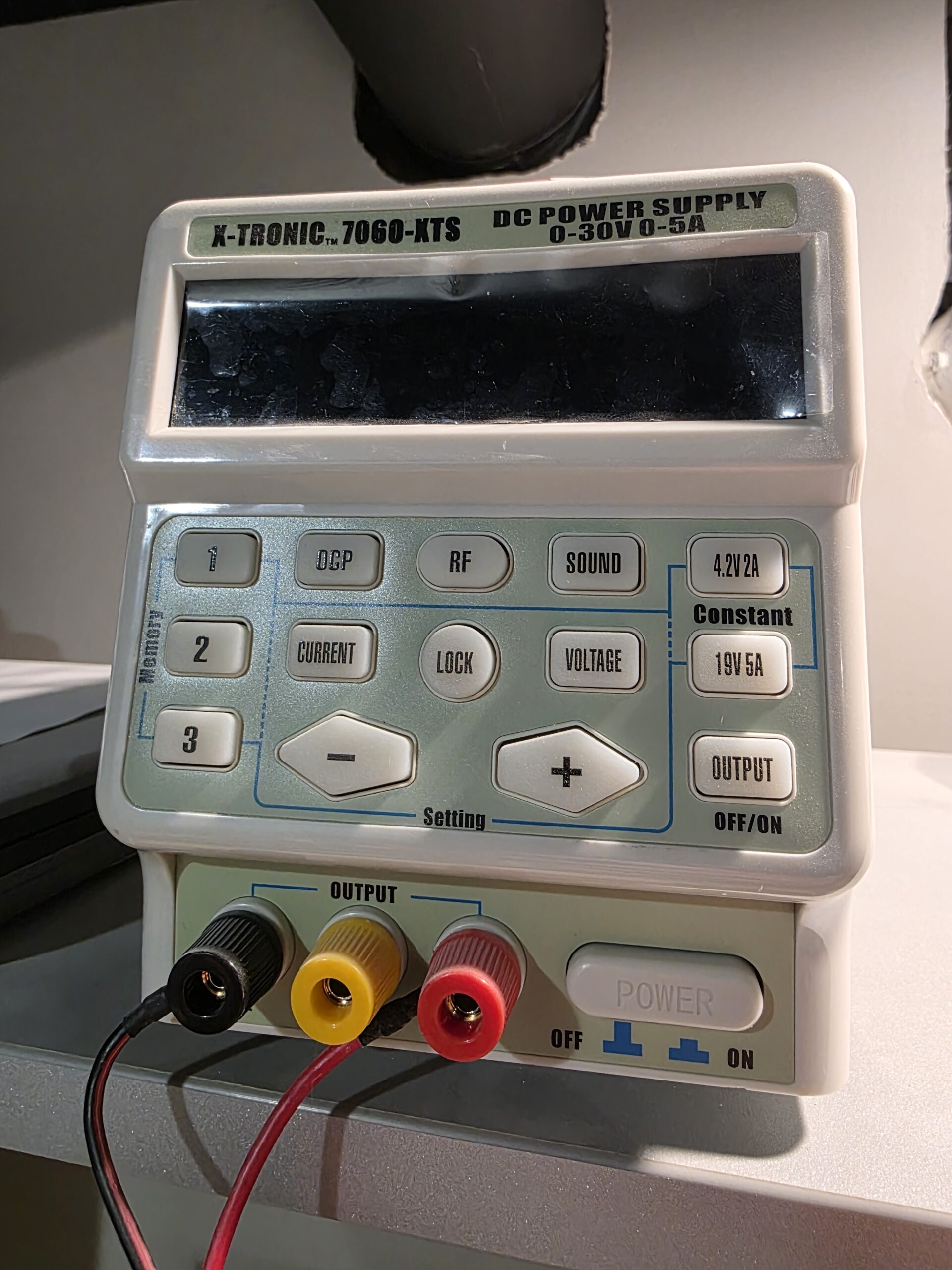
- X-Tronic Variable Power Supply— After purchasing the X-Tronic 5040 rework station above, I decided to stick with the X-Tronic brand as it was exceeding my expectations at its price point. I like the fact that it has programmable outputs that I’ve programmed to my most commonly used voltages. It provides over current limiting which makes me feel better about not accidentally letting the smoke out of something.
General Soldering Tools
Precision Tweezer Set
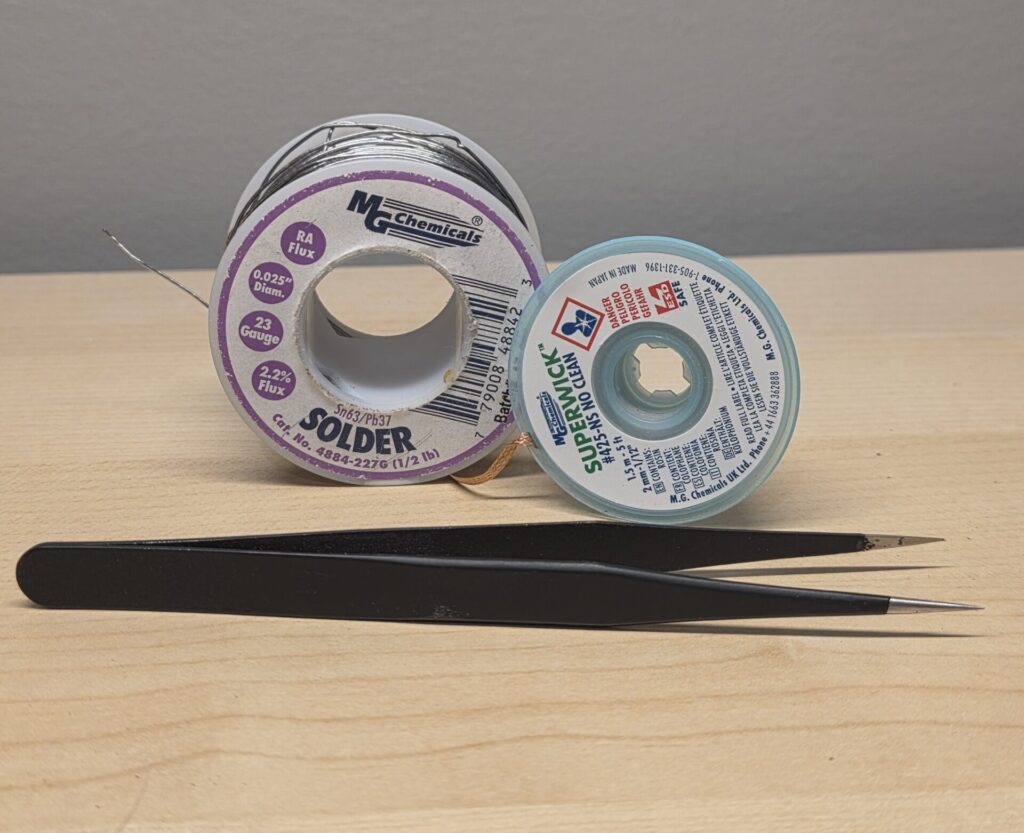
- ESD Tweezer Set – I have this set and like how it came organized in a case and included an “X-Acto” knife. No matter what I am trying to solder or assemble I always feel like I have a pair of tweezers to get the job done.
- Solder- This MG Chemicals flux core solder flows well and is hard to beat for the price.
- Solder Wick – I am a fan of MG Chemicals or Chemtronics. A good solder wick will really go a long way in wicking up solder. If you cheap out on this, you will have a miserable time trying to clean up your board!
- Flux – After years of soldering, this is my go-to flux. It flows well and cleans up easy with IPA.
Safety Gear
These don’t get the spotlight, but they’re just as important as any tool listed above.
- Safety Goggles — A must whenever cutting component leads or soldering. You just can’t predict where a lead clipping is going to fly after you clip it! I keep a few pairs around the house so I always have a pair available.
How This List Evolves
This page will keep changing as projects change. Tools that earn their keep stay; tools that don’t eventually disappear.