My Home DIY Toolbox
This page is a running snapshot of the tools I actually rely on for home repairs and small projects. It isn’t a checklist and it isn’t meant to sell you on anything — it’s simply what’s earned a permanent place in my garage because it works.
Some of these tools were essentials from day one, others earned their spot over time. I update this list as projects change and new tools prove themselves.
My Tool Buying Philosophy: Spend Based on Use
When I buy tools, I don’t automatically go for the cheapest or the most expensive option. Instead, I base my spending on how often I expect to use the tool.
- High-use tools → I invest in quality
If it’s something I’ll use regularly, I’m willing to pay more for better durability, accuracy, comfort, and reliability. - Occasional-use tools → Mid-range or budget
If a tool only comes out a few times a year, I focus on “good enough” performance without overspending. - Rare-use tools → Budget or borrow
For tools I may only need once or twice, I’ll either buy budget, rent, or borrow rather than invest heavily.
This approach helps me:
- Avoid wasting money on overkill
- Get reliable performance where it matters most
- Build a toolbox that balances cost, quality, and real-world usage
Measuring & Layout
Getting measurements right is the difference between a quick win and redoing the same job twice. These are the tools I reach for before anything gets cut or mounted.
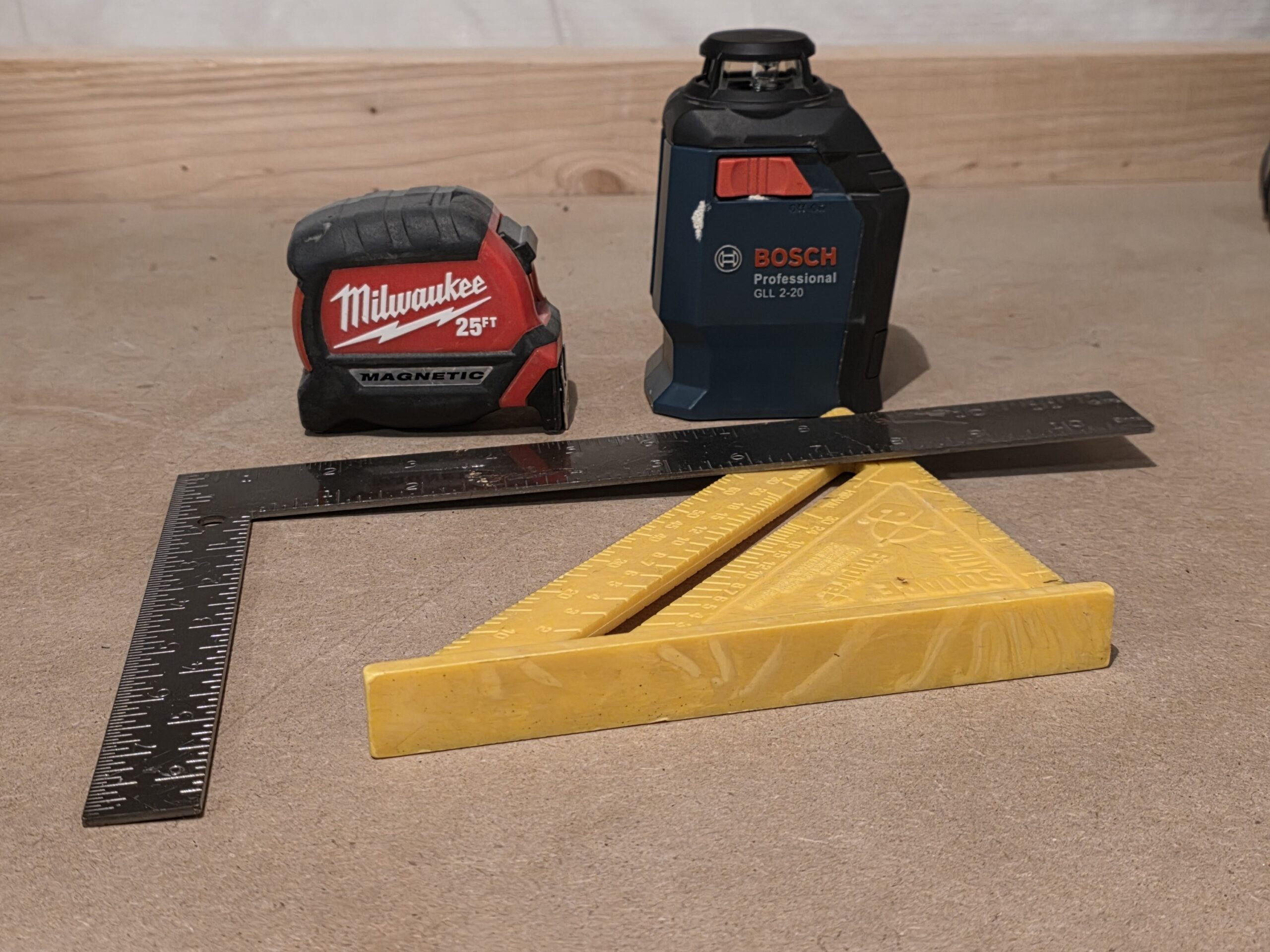
- Tape Measure — The most-used tool I own. Accurate measurements save time, material, and frustration.
- Level (Laser or Bubble) — Keeps shelves, frames, and installs looking intentional instead of almost straight. This is the new model to the one I have. I like the 360 degree feature on mine for certain tasks. They do make a cheaper non 360 model.
- Speed Square / Carpenter Square — Perfect for quick layout work and marking clean, repeatable lines.
Basic Hand Tools
These tools handle most everyday fixes — loose hardware, trim work, light demolition, and general tinkering.
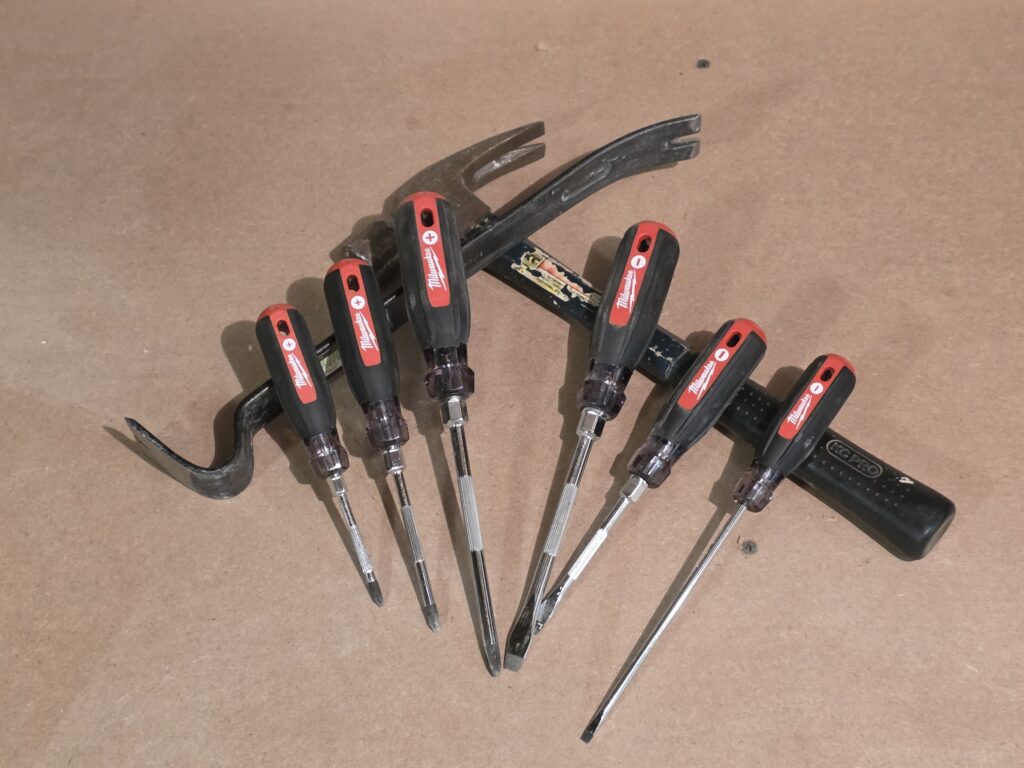
- Claw Hammer — Reliable for nails, light demo, and a surprising number of odd jobs.
- Screwdriver Set — Covers everything from outlet plates to cabinet adjustments. I prefer the feel to these over other brands.
- Pry Bar — Essential for removing trim or lifting boards without destroying surrounding material.
Cut & Trim
From opening packages to shaping materials, these tools handle most of my cutting needs without overcomplicating things.
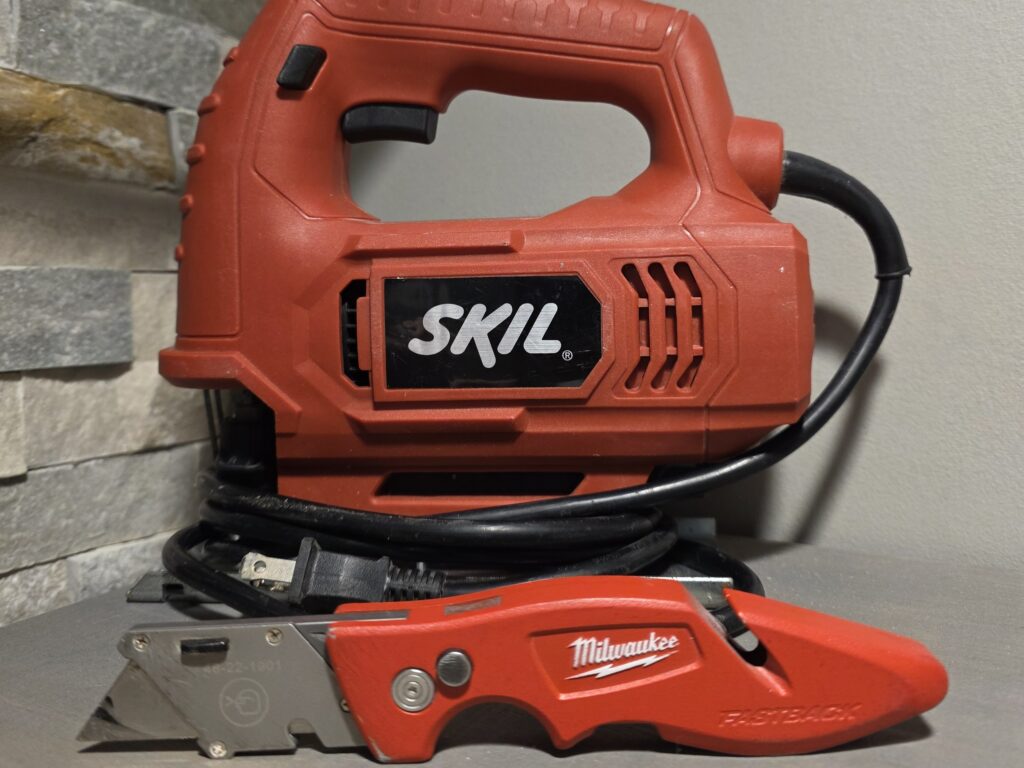
- Utility Knife — Constantly useful for quick cuts, cleanup work, and trimming materials. This one is comfortable in the hand, quick blade change, and hasn’t let me down yet.
- Jigsaw — Ideal for curves, notches, and detail cuts that other saws can’t manage.
My Go-To Power Tools
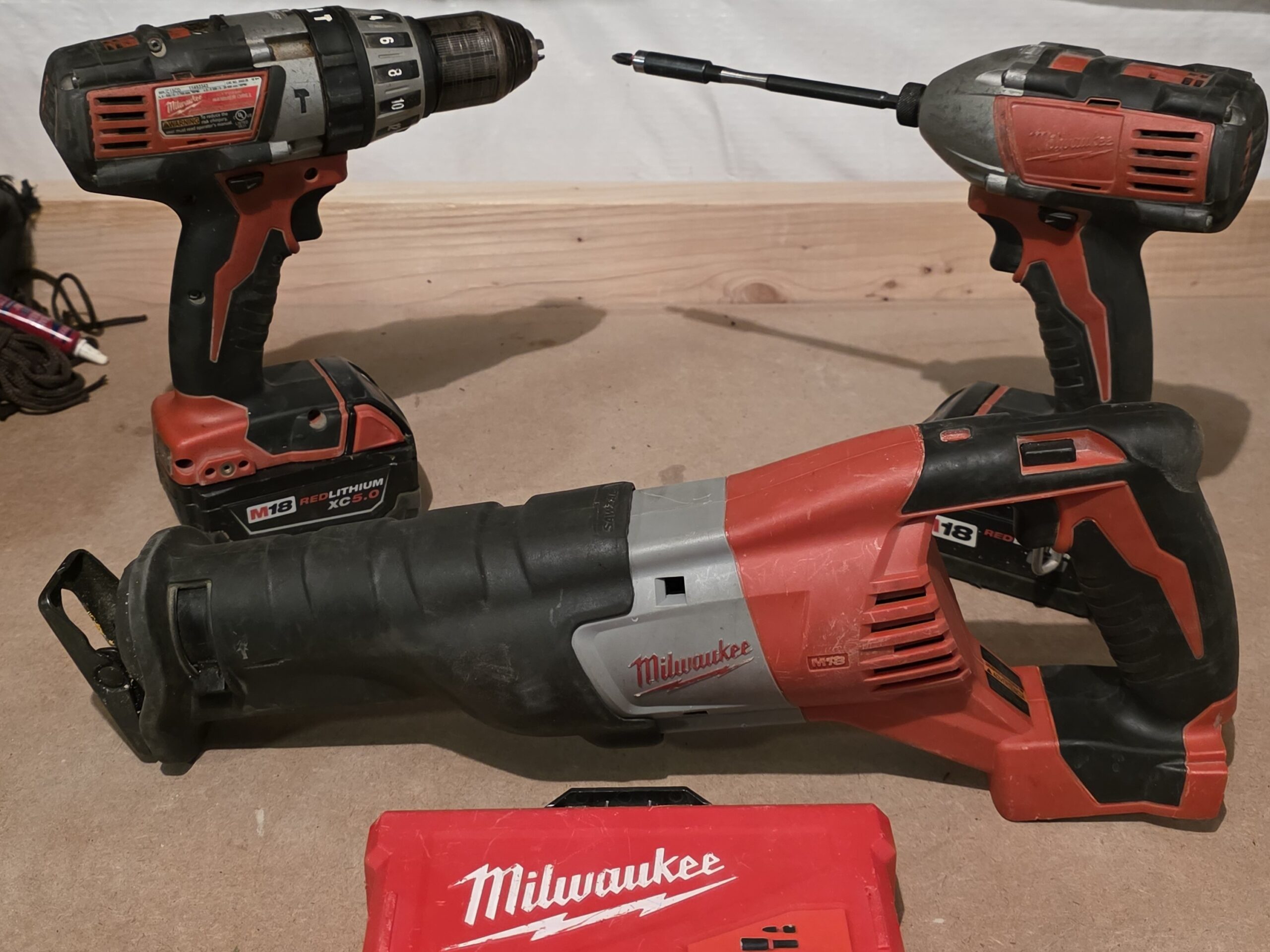
These are the tools that see the most use. If something needs to be built, repaired, or modified, it usually starts here. This is a great kit that includes most of the below items.
- Cordless Drill — The most versatile tool I own and the first thing I grab for most projects.
- Impact Driver — Extra torque makes driving fasteners faster and cleaner.
- Drill Bits & Driver Bits — Often overlooked, but absolutely essential.
- Circular Saw — Great for breaking down lumber and sheet goods.
- Oscillating Multi‑Tool — My go‑to problem solver for tight spaces and awkward cuts.

Fastening & Assembly Helpers
These tools make building and assembling parts faster and more precise.
- Clamps — Act like extra hands when assembling or gluing parts together.
- Brad Nailer / Nail Gun — Makes trim and finish work faster and more consistent.
Safety Gear
These don’t get the spotlight, but they’re just as important as any tool listed above.
- Safety Goggles — A must whenever cutting, drilling, or sanding. I keep a few pairs around the house.
- Dust Mask & Ear Protection — Especially important during longer power‑tool sessions. I certainly enjoy the ear protection when I’m mowing the lawn as well!
How This List Evolves
This page will keep changing as projects change. Tools that earn their keep stay; tools that don’t eventually disappear.