
What makes a good workbench?
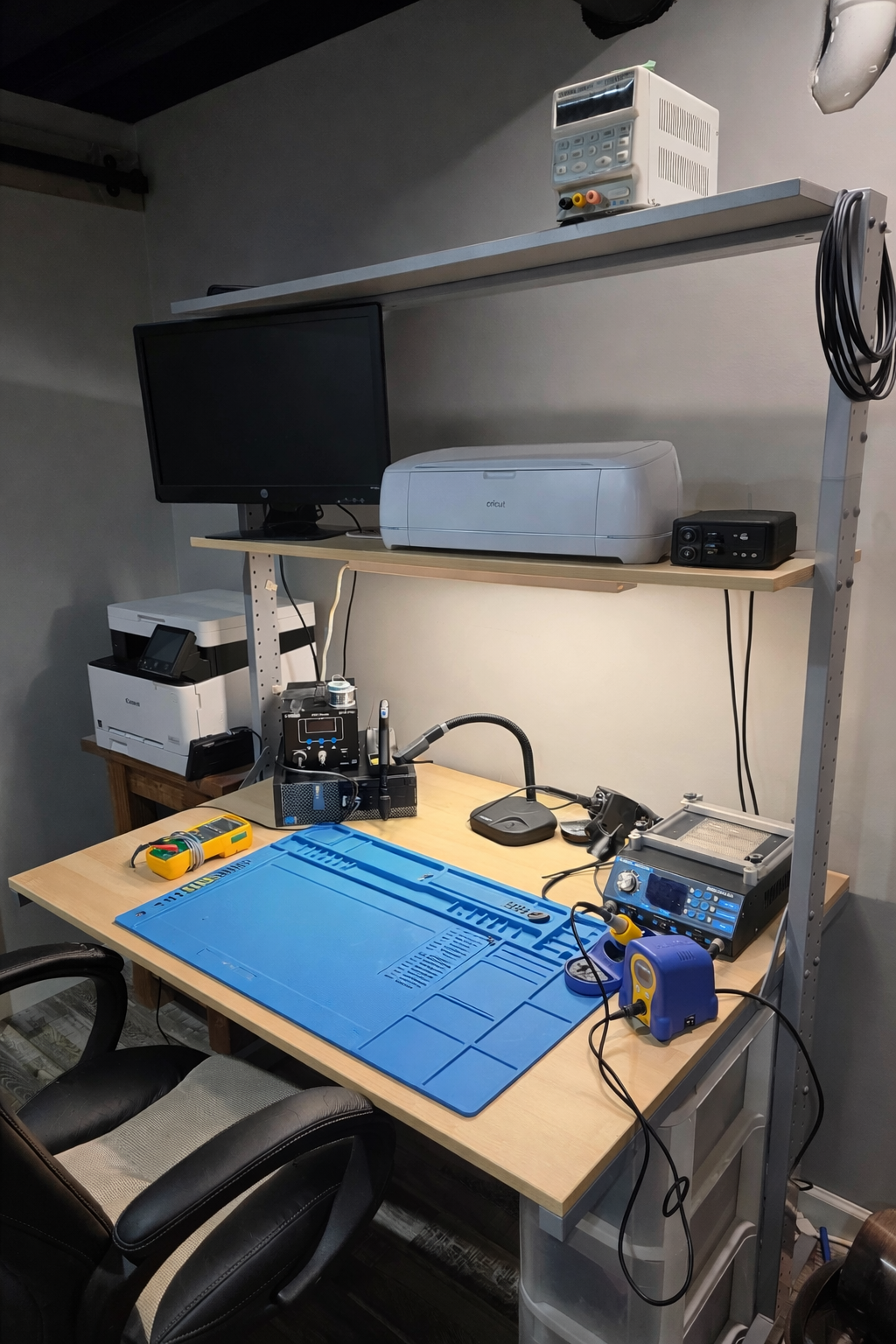
When it comes to my electronics workbench, I’m using an older IKEA Jerker desk that I picked up second-hand. Even though it’s no longer made, the shape of the desk and the two upper shelves make it a surprisingly solid choice for any home DIY or electronics setup.
What really makes a difference with a workbench is how easily you can lay out your tools and actually use them. The Jerker gives me plenty of flat workspace while keeping commonly used tools, parts, and test equipment within arm’s reach on the upper shelves. That layout keeps the bench functional without feeling cluttered, which is especially important when working on electronics.
When you’re choosing a workbench of your own, don’t just think about size, think about workflow. A good bench should make it easy to spread things out, grab tools quickly, and stay organized while you’re in the middle of a project.
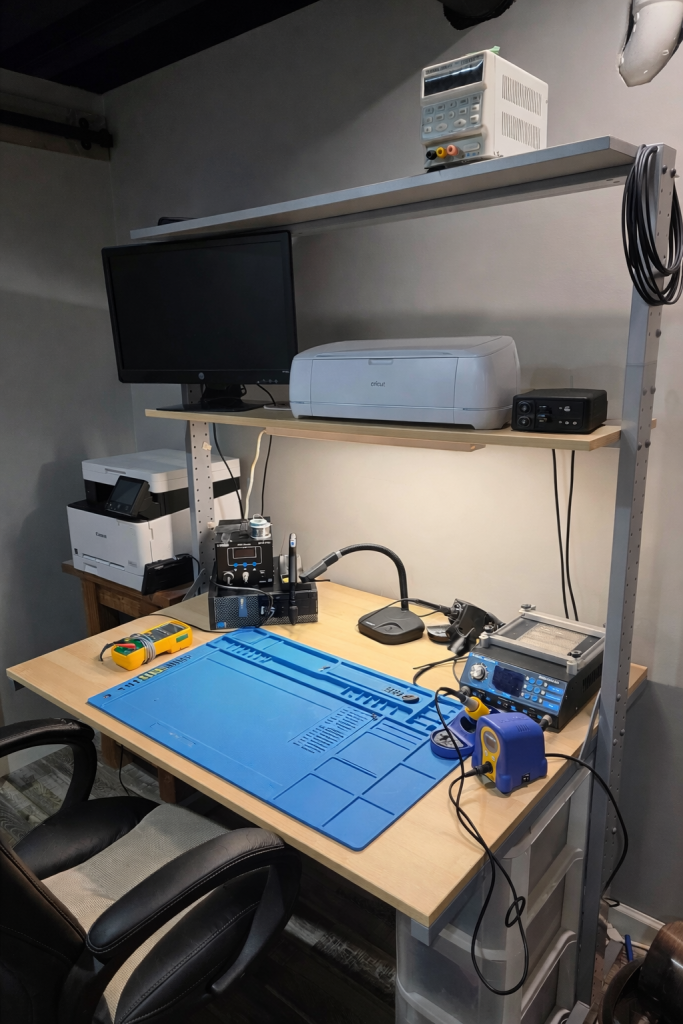
Tools Shown in Photo
- Kaisi S-160 Soldering Mat
- Hakko FX888D
- X-Tronic 5040-XR3 All-In-One Hot Air Rework & Soldering Iron Station with Preheater
- Plastic 3 Drawer Storage Bin
- YIHUA 948 Desoldering Station
- Fluke 233 DMM
- X-Tronic Variable Power Supply with Presets